Jesus Cave Rishikesh: The Legend of Jesus’ Lost Years
Discover Arundhati Guha, a small cave near Vashistha Guha Ashram where local spiritual tradition connects the Ganges-side landscape with stories about Jesus’ so-called “Lost Years.” Explore the setting, the monks associated with the area, and practical tips for visiting respectfully.
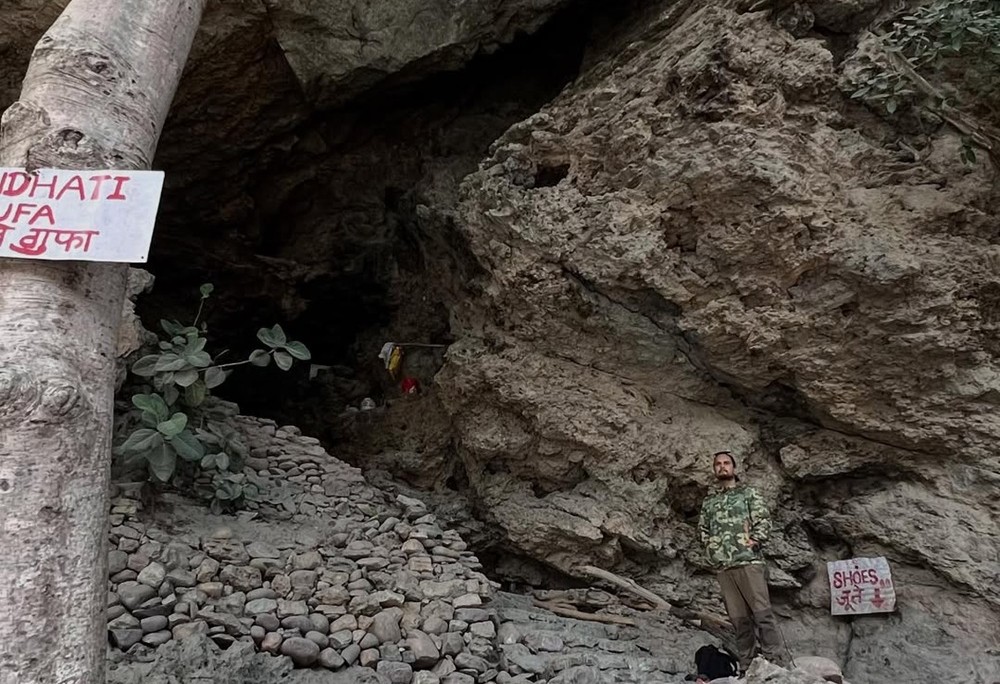
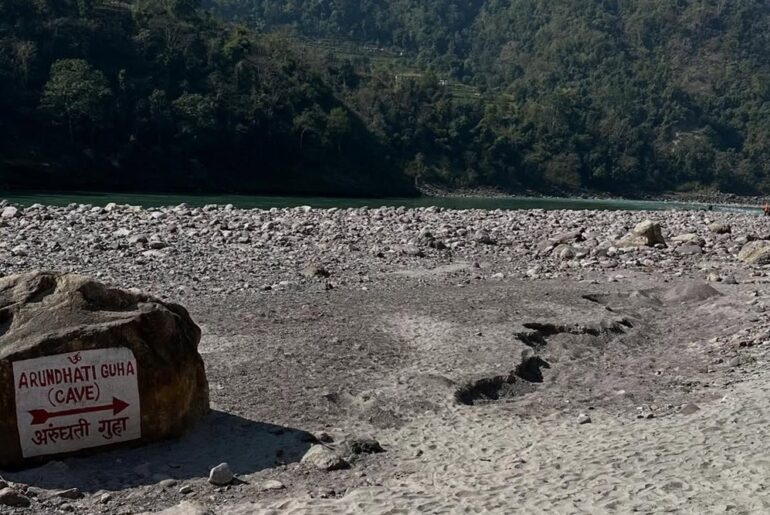
Jesus Cave Rishikesh is said to be within the wider premises of Vashistha Guha Ashram, on the bank of the Ganges, around 23–25 km from Rishikesh toward Devprayag along the Badrinath Highway. From the ashram area, visitors describe a walk of roughly five minutes down toward a sandy and rocky riverbank and up to a small cave facing the Ganga.
Quick Facts: Jesus Cave Rishikesh
Also known as
Arundhati Guha or Arundhati Cave.
Nearby landmark
Vashistha Guha Ashram, on the Rishikesh–Devprayag road.
Landscape
A small hillside cave facing the Ganges, with views of the river and green slopes.
Why it is known
Local spiritual narratives connect the cave with visions of Jesus and the story of his “Lost Years.”
- Jesus Cave, also called Arundhati Guha, is a meditation site associated with the Vashistha Cave area near Rishikesh.
- Traditions connected with Swami Rama Tirtha and Swami Papa Ramdas describe spiritual visions involving Jesus. These accounts are best understood as religious testimony rather than independently verified historical evidence.
- The cave sits on a steep hillside above the Ganges, offering a quiet setting for reflection when access and river conditions allow.
- The area is valued for its spiritual atmosphere, river scenery, and links with Himalayan ascetic traditions.
Swami Purushottamananda and Vashistha Guha
Vashistha Guha is closely associated with Swami Purushottamananda, a monk who is said to have lived and meditated in the cave from 1928 until his death on 13 February 1961. Accounts of his life describe him as a disciple of Swami Brahmananda Saraswathi and say that he turned toward a life of renunciation after completing an engineering education.
- After leaving his earlier institutional life, he travelled through the Himalayas along the Ganges in search of spiritual practice and guidance.
- Tradition places his arrival at Vashistha Guha in 1928, when the area was more secluded and surrounded by tall trees.
- He is remembered for extended meditation and austerities at the cave.
- His passing is commonly associated with Maha Shivaratri in 1961.
For a biographical account, see Swami Purushottamananda.
Vashistha Cave Ashram
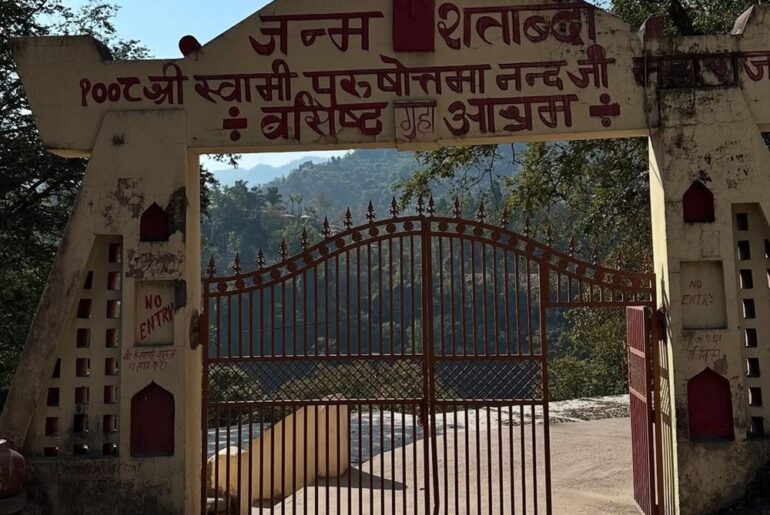
Vashistha Guha is located roughly 23–25 km from Rishikesh on the road toward Devprayag. According to Hindu tradition, Sage Vashistha—the revered teacher of Rama and his brothers—meditated in this region. Such ancient associations belong to religious tradition and are not the same as a securely dated historical record.
The ashram today
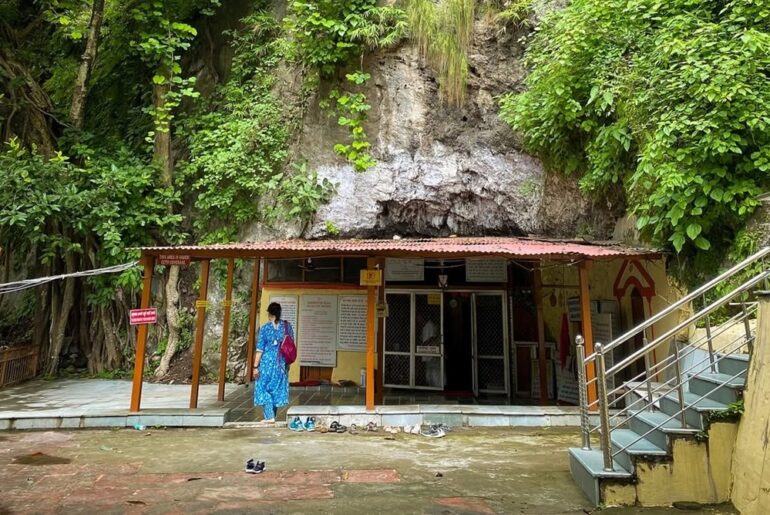
- The ashram is known for its cave shrine and Shiva lingam, where visitors may pause for prayer or quiet meditation.
- Swami Chaitanyananda is named in local accounts as one of the monks caring for the ashram; Swami Shantananda Puri is also associated with the site.
- Stories told by devotees describe Purushottamananda meditating inside the cave while a lion rested near the entrance after sunset. This should be treated as an oral spiritual account.
- The ashram continues to attract pilgrims, meditation practitioners, and travellers seeking a quieter place away from central Rishikesh.
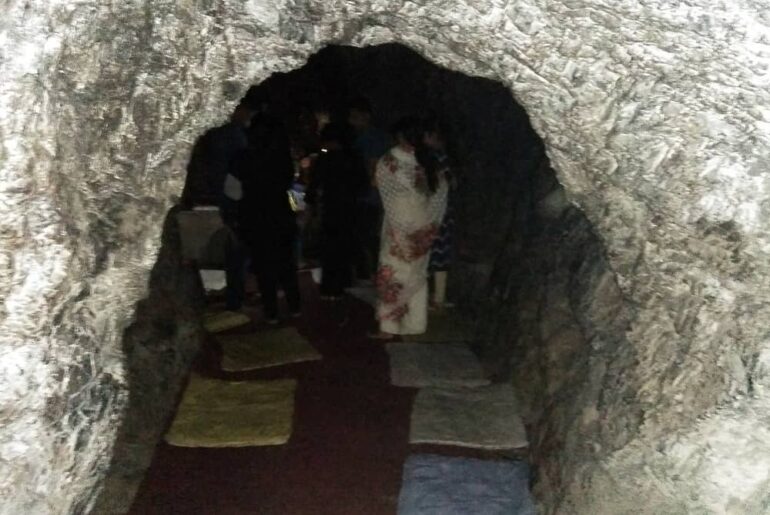
Inside Vashistha Cave
Descriptions of the cave note that it extends into the hillside before opening into a small chamber where a handful of people can sit quietly. A stone seat is associated with Swami Purushottamananda’s meditation practice. The cave shrine includes a Shiva lingam, and visitors may see traditional offerings such as flowers, water, and oil lamps.
Accounts also mention visits by spiritual figures, including Sathya Sai Baba, during the twentieth century. The Ganges curves broadly near the ashram, creating a riverbank landscape that many visitors find peaceful. River access and the shape of the beach can change with the season and water level.
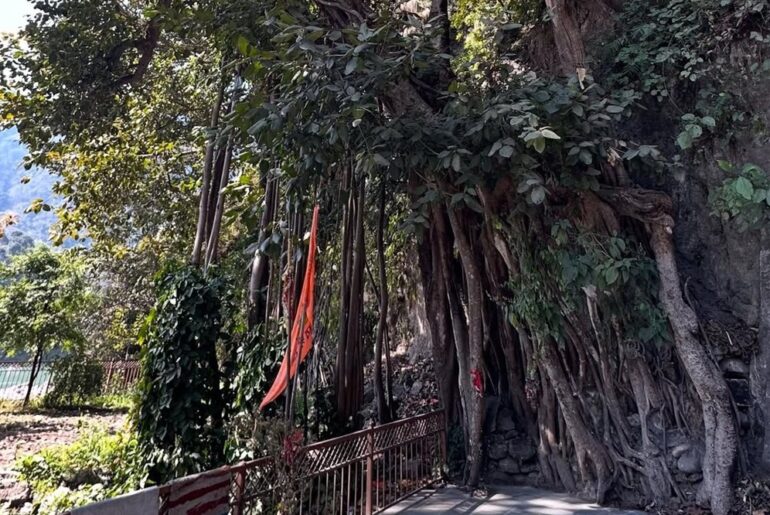
Jesus Cave Rishikesh (Arundhati Cave)
About a five-minute walk from the ashram area, Arundhati Guha is described as a small cave set slightly up the hillside and facing the Ganges. It is not as deep as Vashistha Guha; visitors have reported seeing a small white Shiva lingam toward the back. Please follow local directions, avoid entering unsafe areas, and respect any restrictions set by the ashram or land managers.
The cave is associated with the name Jesus Cave through stories shared by spiritual seekers in the twentieth century. A commonly repeated account links the site with Papa Ramdas and his book In Quest of God (published in 1924; editions and retellings vary). In these devotional narratives, a vision of Jesus is said to have occurred in a small cave near Vashistha Guha.
Some versions of the story also refer to Swami Rama Tirtha and visions of Jesus. These stories form part of the site’s spiritual reputation. However, there is no widely accepted historical or archaeological evidence proving that Jesus lived in this particular cave or travelled to India during the years missing from the canonical Gospels. Visitors can appreciate the tradition while distinguishing faith narratives from established historical fact.
For the location, open Google Maps directions to Arundhati Cave. Coordinates listed in the original guide are approximately 30.1140° N, 78.4308° E; verify the pin and route locally before setting out.
How to Visit Jesus Cave Rishikesh
Getting there
Travel from Rishikesh toward Devprayag on the Badrinath Highway and look for the Vashistha Guha Ashram area. Confirm the current approach and parking arrangements before leaving.
Walk and terrain
The path toward the river and smaller cave may be steep, uneven, or slippery. Wear shoes with good grip and do not attempt the walk if conditions feel unsafe.
Best approach
Visit in daylight, allow time to explore the ashram respectfully, and ask local caretakers for current access information.
Respect the site
Keep noise low, avoid littering, do not disturb worshippers, and follow signs or instructions. River levels can rise quickly during rain and monsoon periods.
Suggested nearby reading
CavesMeditationHimalayan spirituality
- Vashistha Guha Cave Rishikesh
- Om Homestay Tapovan, Rishikesh — check current availability and facilities directly.
- Plan other regional excursions with Rishikesh Day Tour.
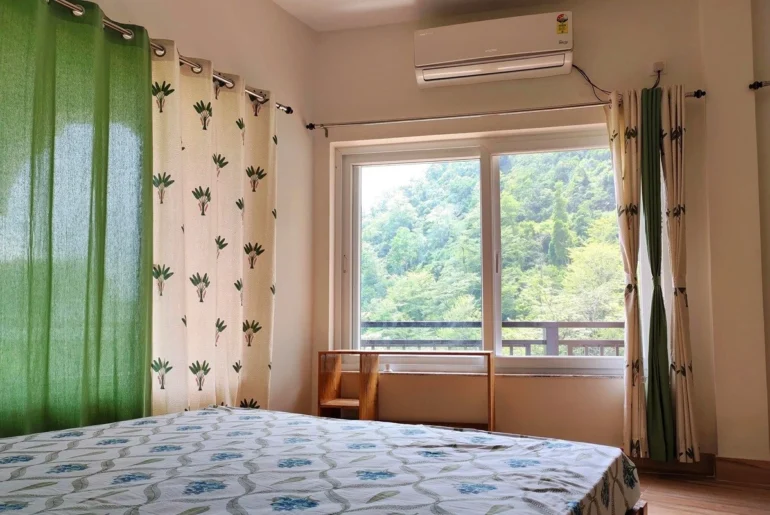
Explore Rishikesh’s spiritual places
Use these guides to plan a respectful visit to the Ganges valley and nearby Himalayan landmarks.
Frequently Asked Questions
Where is Jesus Cave in Rishikesh?
Jesus Cave, also called Arundhati Guha, is associated with the Vashistha Guha Ashram area on the Ganges, around 23–25 km from Rishikesh toward Devprayag.
Is Jesus Cave the same as Vashistha Cave?
No. They are described as separate caves in the same general area. Vashistha Guha is the larger, well-known cave shrine; Arundhati Guha is a smaller cave associated with the Jesus Cave legend.
Why is it called Jesus Cave?
The name comes from spiritual accounts and devotional traditions that connect the cave with visions of Jesus and the theory that Jesus travelled to India during his “Lost Years.” This connection has not been established by conclusive historical evidence.
Did Jesus historically live in this cave?
There is no widely accepted historical or archaeological evidence proving that Jesus lived in this specific cave. The story is best presented as a local spiritual tradition rather than a confirmed fact.
Can visitors meditate there?
Visitors may find the area suitable for quiet reflection, but access can depend on local conditions and permissions. Follow the ashram’s guidance and avoid unsafe paths or river edges.
How far is Jesus Cave from Rishikesh?
The Vashistha Guha area is commonly described as about 23–25 km from Rishikesh. Travel time varies with traffic, road conditions, and the exact starting point.
Travel note: distances, paths, and access conditions can change. Confirm current local guidance before visiting. Religious traditions and oral histories in this article are identified as traditions where historical evidence is uncertain.
For more spiritual destinations and trip-planning ideas, visit RishikeshDayTour.com. For information about the Himalayan cave pilgrimage, explore BabajiCave.com.

Comments are closed.