
Jhilmil Cave (Gufa) near Neelkanth Rishikesh: History, Trek & Distance
Rishikesh, the sacred pilgrimage town of Uttarakhand, is renowned for its ancient temples, holy ghats, and mystical caves hidden deep inside forests. Among these spiritual treasures, Jhilmil Cave, also known as Jhilmil Gufa, stands out as one of the most mysterious and spiritually powerful caves near Neelkanth Mahadev.
Located about 30 km from Rishikesh (including a short trek), this ancient cave is believed to date back to Satya Yuga and is deeply connected with sages, yogis, and the timeless Sanyas tradition of India.
Jhilmil Gufa Neelkanth Rishikesh – Overview
Jhilmil Gufa Neelkanth Rishikesh lies on Manikoot Parvat (Mountain), close to the revered Neelkanth Mahadev Temple. The cave is situated inside Kajari Van, surrounded by dense forests and wildlife corridors of the Rajaji National Park.
This cave is not abandoned—it is a living cave, where Naga sadhus and ascetics still meditate, making it a rare spiritual destination in modern times.
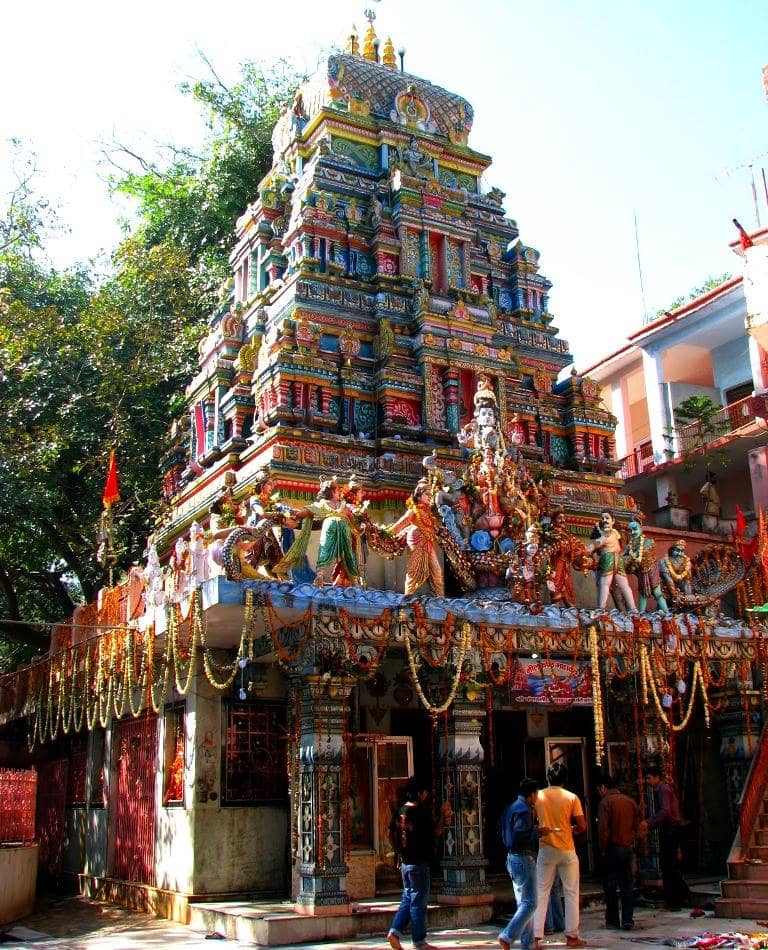
Jhilmil Cave (Jhilmil Gufa) – Spiritual & Natural Wonder
The Jhilmil Cave is thousands of years old and naturally formed. Inside, you will witness:
-
Unique stalactites (hanging rock formations)
-
Rising stalagmites from the cave floor
-
Naturally cool temperatures
-
A deeply meditative silence
Many visitors sit silently inside the cave, experiencing intense calm and inner peace. Locals believe the cave radiates special spiritual energy, and performing sadhana here can fulfill wishes.
Mythological & Historical Significance of Jhilmil Gufa
Baba Gorakhnath Connection
Jhilmil Gufa is strongly associated with Baba Gorakhnath, the great yogi and follower of Lord Shiva. According to legends:
-
Baba Gorakhnath meditated here for thousands of years
-
He performed Hawan (sacred fire rituals) inside the cave
-
The blackened cave walls are believed to be marks of his eternal dhuni (sacred fire)
-
Lord Shiva and Baba Gorakhnath are said to have discussed yoga and divine knowledge here
Mahabharata Connection
As per Hindu mythology, the Pandavas also used this cave during their exile (Vanvaas) for meditation and refuge.
The cave is also named after Jhilmila Sadhu, a sage who attained Samadhi here.
Suggested Read: Balkumari Temple Rishikesh: Embracing the Divine Feminine
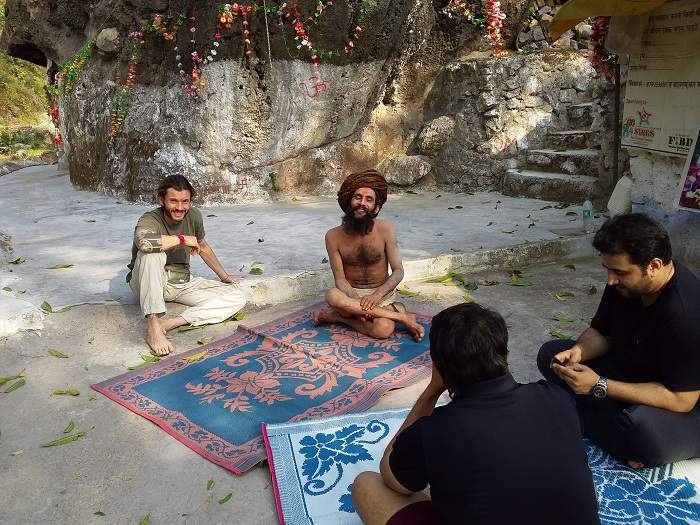
 A tourist with pilgrims at Jhilmil cave
Jhilmil Gufa in Rishikesh – Distance & Location
-
Rishikesh to Jhilmil Gufa distance: ~30 km
-
Trek distance: ~2 km (final stretch)
-
From Neelkanth Mahadev Temple: ~5 km uphill
-
From Dehradun: ~75 km
-
From Haridwar: ~65 km
The nearest airport is Jolly Grant Airport, and the nearest railway station is Rishikesh.
How to Reach Jhilmil Cave (Gufa)
🚗 By Road
Travel from Rishikesh towards Neelkanth Mahadev Temple via Badrinath Highway and Neelkanth motor road.
🥾 By Trek (Adventure Route)
-
Trek via Ram Jhula – Beatles Ashram – Neelkanth route
-
Passes through dense forests of Rajaji National Park
-
Wildlife sightings (elephants, leopards) are possible
⚠️ Important: Finish trekking before sunset due to wildlife movement.
Suggested Read: Kunjapuri Sunrise Trek near Rishikesh

Jhilmil Cave by Foot – A Spiritual Adventure
Jhilmil Cave can also be reached by a long forest trail (approx. 15 km on foot) through Rajaji National Park. The trek offers:
-
Stunning valley views
-
Dense untouched forests
-
Peaceful Himalayan silence
-
Occasional interaction with sadhus
This route is ideal for experienced trekkers and spiritual seekers.
Attractions Around Jhilmil Gufa
Nearby sacred and natural attractions include:
-
Ganesh Gufa – Rock formation resembling Lord Ganesh
-
Hanuman Gufa – Natural structure resembling Lord Hanuman
-
Jhilmil Waterfalls – Seasonal hidden waterfalls
-
Interaction with Naga Sadhus
-
Birdwatching & forest meditation spots
Pilgrims often participate in group meditation sessions near the cave.
Where to Stay Near Jhilmil Cave
-
Rishikesh: Budget to luxury hotels & ashrams
-
Near Neelkanth Temple: Basic lodges & Dharamshalas
-
Near Ganesh Gufa: Very basic stays (negotiation required)
Most travelers prefer staying in Rishikesh and doing a day trip.
Suggested Read: Half-Day Gujjar Village Trek with Secret Waterfalls.
Best Time to Visit Jhilmil Gufa Rishikesh
-
Best season: October to March
-
Avoid: Monsoon (July–September) due to landslides & wildlife activity
Winters offer the best trekking conditions and spiritual calm.
Jhilmil Gufa Neelkanth Rishikesh – What to Expect
-
Deep silence and spiritual vibration
-
Cool cave interiors ideal for meditation
-
Forest sounds, chanting sadhus, temple bells
-
A feeling of stepping into ancient yogic history
Visitor Tips
-
Wear trekking shoes
-
Carry water, snacks & torch
-
Avoid loud behavior inside the cave
-
Respect sadhus and ongoing meditation
-
Do not litter or damage cave formations
Suggested Read – Rajaji National Park – The Kingdom of the Elephant
Conclusion
Jhilmil Cave (Gufa) in Rishikesh is not just a cave—it is a living legend of yoga, sadhana, and divine energy. The journey through Rajaji National Park, the mystical silence of Manikoot Parvat, and the ancient presence of Baba Gorakhnath make this experience unforgettable.
For those seeking offbeat adventure, deep spirituality, and untouched nature, Jhilmil Gufa near Neelkanth Mahadev is a sacred journey that stays in your heart forever. 🕉️🌿