
Discover Uttarakhand Kedarnath Temple, India: History and Legends
The Chamoli district of Uttarakhand is home to more than 200 shrines dedicated to Lord Shiva, with Uttarakhand Kedarnath Temple being the most significant. According to legend, after the Pandavas emerged victorious in the Kurukshetra war, they sought redemption for killing their own kin and turned to Lord Shiva for forgiveness.
Shiva, however, eluded them and took refuge at Kedarnath in the form of a buffalo. When the Pandavas followed him, Shiva dived into the ground, leaving only his hump on the surface, which is now worshipped at Kedarnath. The remaining parts of his body manifested at four other locations, forming the Panch Kedar (Panch meaning five in Sanskrit). These are: Uttarakhand Kedarnath Temple
- Tungnath – where Shiva’s arms appeared.
- Rudranath – where his face is worshipped.
- Madmaheshwar – where his belly is honored.
- Kalpeshwar – where his locks and head are worshipped.
Kedarnath Temple
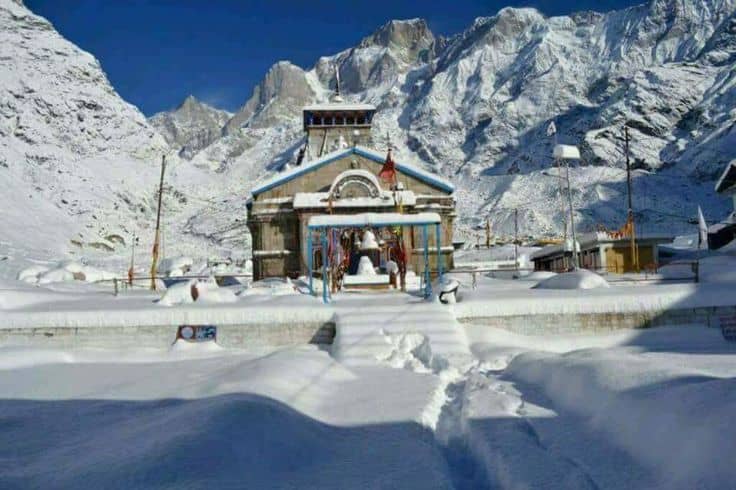
The Kedarnath Temple stands majestically on a plateau surrounded by towering, snow-covered peaks. Originally built by Jagad Guru Adi Shankaracharya in the 8th century A.D., the temple is adjacent to a site believed to have been established by the Pandavas.
Inside the temple, the assembly hall’s inner walls are adorned with figures of deities and mythological scenes. Outside, a large statue of Nandi, the sacred bull of Shiva, guards the entrance. Uttarakhand Kedarnath Temple
The temple’s architecture is truly awe-inspiring, with its construction comprising enormous, evenly cut grey stone slabs, leaving one to marvel at how such heavy stones were moved in ancient times. The temple houses a Garbha Griha (sanctum sanctorum) for worship, and a Mandap for gatherings of pilgrims.
Suggested Read: Uttarakhand Badrinath Temple: Legends | History | Significance

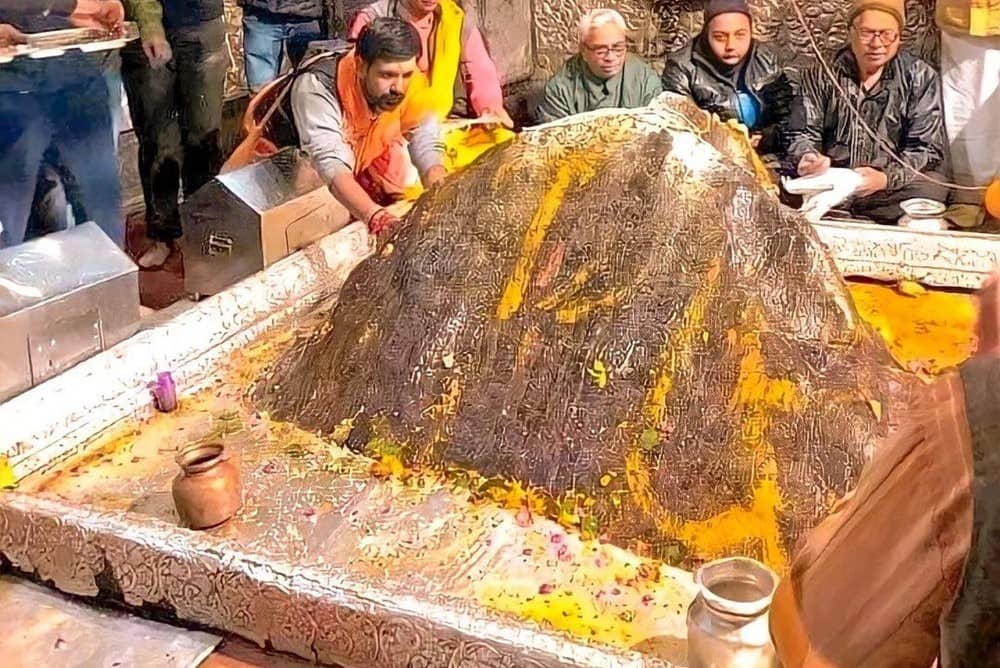
The centerpiece inside the temple is a conical rock formation, worshipped as Lord Shiva in his Sadashiva form. This sacred site, nestled in the Himalayas, is not only a significant pilgrimage destination but also a testament to the spiritual and architectural grandeur of ancient India.
In Hindu tradition, Lord Shiva is believed to manifest in the form of a Jyotirlingam, a symbol of cosmic light. Among the 12 Jyotirlingas spread across India, Kedarnath is the highest, situated in the Rudra Himalaya range of Uttarakhand, at an altitude of 3,581 meters. Uttarakhand Kedarnath Temple
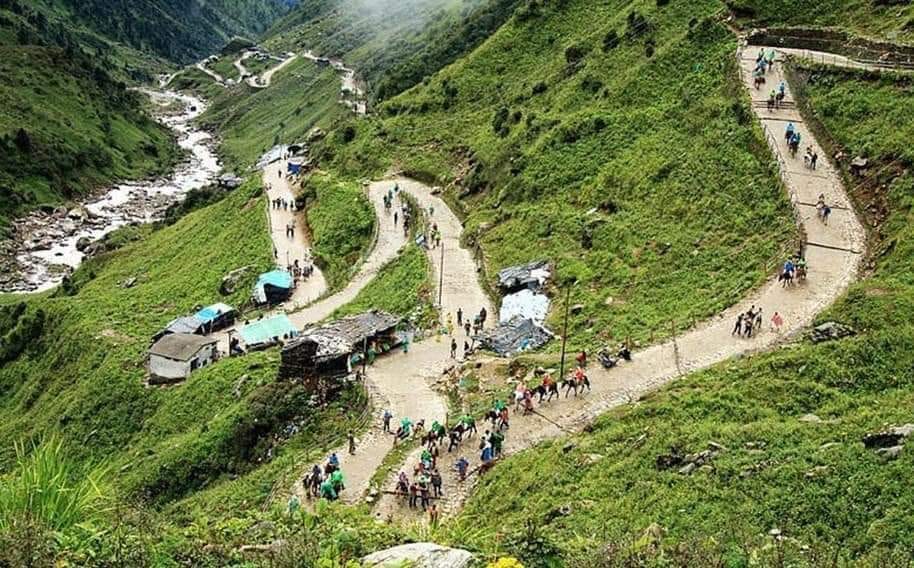
The temple, built over a thousand years ago by Jagad Guru Adi Shankaracharya, stands as a significant spiritual site. It is accessible via a 16 km trek from Gaurikund, the nearest point reachable by road.
Architecture of Kedarnath Temple
The Kedarnath Temple is an architectural marvel, constructed using massive stone slabs arranged over a large rectangular platform. Pilgrims ascend the temple through large grey steps, which feature inscriptions in the Pali language. Inside, the sanctum walls are adorned with depictions of various deities and mythological scenes.
Legends and Mythology
The origins of the Kedarnath Temple are rooted in the Mahabharata. After winning the battle against the Kauravas, the Pandavas sought Lord Shiva’s blessings to atone for the sin of killing their kin in war. Shiva, however, avoided them and took refuge at Kedarnath in the form of a buffalo.
When the Pandavas pursued him, Shiva dived into the ground, leaving only his hump above the surface. This hump, now in the form of a conical rock formation, is worshipped as Lord Shiva in his Sadashiva form within the temple’s sanctum. Uttarakhand Kedarnath Temple
The Pujas (rituals) are performed by priests and pilgrims to this manifestation. Additionally, a portable statue of Lord Shiva, known as the Utsavar, is housed in the temple and is worshipped during festivals.
Outside the temple, a large statue of Nandi, Shiva’s sacred bull, stands guard at the entrance. Uttarakhand Kedarnath Temple
Significance: Uttarakhand Kedarnath Temple
According to the Skanda Puran, Lord Shiva, known as Lord Shankar, revealed to Mata Parvati the immense significance and ancient heritage of the Kedar region. He described this place as being as old as himself and highlighted that it was here he assumed the divine form of Brahma to commence the creation of the universe.
Consequently, this region, known as Kedarkhand, became a favored abode for Lord Shiva, likened to heaven on earth. Uttarakhand Kedarnath Temple
Jyotirlinga Significance
Kedarnath is one of the twelve Jyotirlingas in India and holds a prominent position among them. Specifically, it is referred to as Sri Kedar Ekadash, located amidst the snowy peaks of the northern part of Rudraprayag, Uttarakhand. Its elevation and location in the Himalayas contribute to its paramount importance among all Jyotirlingas.
Historical Construction
It is believed that the Pandavas, after the Mahabharata war, constructed the Kedarnath temple. The temple stands about 80 feet high and is renowned for its architectural beauty. Built using local stones, the temple features a quadrangular shape. Uttarakhand Kedarnath Temple
Temple Features
- Garbhagriha (Sanctum): The primary deity of the temple is the Jyotirlinga, represented as a large rock within the Garbhagriha.
- Stone Statue: Outside the Garbhagriha is a stone statue of Maa Parvati.
- Sabhamandap (Hall): This hall houses idols of the Panch Pandavas, Shri Krishna, and Mother Kunti.
- Main Gate: The entrance features stone sculptures of Ganesha and Shri Nandi.
- Amrit Kund: Located on the Parikrama Path, a sacred water tank known as Amrit Kund is present.
- Bhairavnath Ji: A stone idol of Bhairavnath Ji is situated in the eastern part of the Parikrama Path.

Seasonal Worship
Due to the harsh winter conditions, Kedarnath Temple is inaccessible from November to April when the area is blanketed in several meters of snow. During this time, the holy symbolic statue of Lord Shiva is moved to Ukhimath, where it is worshipped until the shrine reopens in May.
The Badrinath-Kedarnath Temple Committee (BKTC) announces the auspicious dates for the symbolic transit of Lord Shiva’s statue between Kedarnath and Ukhimath. The temple usually closes on the first day of Kartik (Oct-Nov) and reopens during Vaishakh (Apr-May). Pilgrims from across India visit the shrine during the open months to seek Lord Shiva’s blessings.
Weather: Uttarakhand Kedarnath Temple
Kedarnath experiences distinct seasonal variations that significantly impact travel and pilgrimage activities. Here’s an overview of the weather across the year: Uttarakhand Kedarnath Temple
Winter (October to April)
- Weather: Extremely cold with temperatures often dropping below zero. Heavy snowfall is common, making the region inaccessible. Uttarakhand Kedarnath Temple
- Travel: Not suitable for travel, as the Kedarnath temple remains closed due to harsh weather conditions and snow accumulation. Uttarakhand Kedarnath Temple
Summer (May to June)
- Weather: Pleasant with a moderately cold climate, making it the perfect time for sightseeing and the Kedarnath pilgrimage. Uttarakhand Kedarnath Temple
- Travel: Ideal time to visit as the temple reopens for pilgrims, and trekking paths are clear.
Monsoon (July to mid-September)
- Weather: Frequent rains with temperatures dropping further. The region is prone to landslides, making travel challenging and sometimes dangerous.
- Travel: Not recommended, as the temple often closes during these months due to the risk of landslides, and road conditions become unstable. Uttarakhand Kedarnath Temple
Overall Travel Window
- Best Time to Visit: The temple remains open from May to October/November. The summer months of May and June are considered the most favorable for travel. While the region offers breathtaking natural beauty, it’s important to avoid the monsoon season due to safety
How to Reach Kedarnath
By Flight: Uttarakhand Kedarnath Temple
- Nearest Airport: Jolly Grant Airport (35 km from Dehradun), located approximately 235 km from Kedarnath.
- Connectivity: Jolly Grant Airport is well-connected to Delhi with daily flights.
- Transfer to Gaurikund: From Jolly Grant Airport, you can reach Gaurikund via motorable roads. Taxis are readily available for this route.
By Train:
- Nearest Railway Station: Rishikesh, situated 243 km from Gaurikund on NH58.
- Connectivity: Rishikesh railway station is well-connected to major destinations across India, with frequent train services.
- Transfer to Gaurikund: From Rishikesh, you can travel to Gaurikund by road. Taxis and buses are available from Rishikesh, as well as from Srinagar, Rudraprayag, Tehri, and other locations.
By Road: Uttarakhand Kedarnath Temple
- Road Connectivity: Gaurikund is well-connected by motorable roads to various major destinations within Uttarakhand.
- Bus Services: Regular buses to Haridwar, Rishikesh, and Srinagar are available from ISBT Kashmiri Gate, New Delhi.
- Taxis and Buses: Taxis and buses are also available from significant Uttarakhand towns such as Dehradun, Haridwar, Rishikesh, Pauri, Rudraprayag, and Tehri.
- National Highway: Gaurikund is accessible via National Highway 58 from Ghaziabad.
Online bookings made after 15th May 2020 are non-refundable. Book Now
Attending Pujas
| # | Puja Name | Timing | Rate(INR) |
|---|---|---|---|
| 1. | MAHABHISHEK PUJA | MORNING | RS.8500/- |
| 2. | RUDRABHISHEK PUJA | MORNING | RS.6500/- |
| 3. | LAGHURUDRABHISHEK PUJA | MORNING | RS.5500/- |
| 4. | SHODASHOPACHAAR PUJA | MORNING | RS.5000/- |
| 5. | ASHTOPACHAAR PUJA | MORNING | RS.850/- |
| 6. | PANCHOPACHAAR PUJA | MORNING | RS.850/- |
| 7. | ENTIRE PUJA OF THE DAY | MORNING | RS.26000/- |
| 8. | SHIV ASHTOTARI PATH | EVENING | RS. 900/- |
| 9. | SHIV SEHASHTRANAAM PATH | EVENING | RS.1800/- |
| 10. | SHIV NAMAWALI | EVENING | RS.1800/- |
| 11. | SHIV MAHIMANSTROTAM PATH | EVENING | RS.1800/- |
| 12. | SHIV TANDAV STROTAM PATH | EVENING | RS.1700/- |
| 13. | SHIV PARAKSHAMASTROTAM PATH | EVENING | RS.1800/- |
| 14. | ENTIRE EVENING AARTI | EVENING | RS.2500/- |
Non Attending Pujas
| # | Puja Name | Timing | Rate(INR) |
|---|---|---|---|
| 1. | EARLY MORNING PUJA(THROUGH CHIEF PRIEST) | MORNING | RS.850/- |
| 2. | BAAL BHOG (THROUGH CHIEF PRIEST) | MORNING | RS.900/- |
| 3. | UTTAM BHOG PUJA | DAILY | RS.850/- |
| 4. | SPECIAL BHOG PUJA | DAILY | RS.850/- |
| 5. | SIMPLE BHOG PUJA | DAILY | RS.325/- |
| 6. | DAILY BHOG DISTRIBUTION | DAILY | RS.100 & ABOVE |
| 7. | SADAVAART KHICHADI | DAILY | RS.3500/- |
| 8. | DAILY YAGYA/HAWAN | DAILY | RS.1800/- |
| 9. | AKHAND JYOTI DAINIK | DAILY | RS.3500/- |
| 10. | DEEP BATTI DAAN | DAILY | RS.900/-& ABOVE |
| 11. | BHAIRAV PUJAN BHET | DAILY | RS.900/- & ABOVE |
| 12. | NITYA NIYAM BHOG SHRI KEDARNATH JI | DAILY | RS.3510/- |
| 13. | NITYA NIYAM BHOG FOR DEITIES OF SUBORDINATE TEMPLE | DAILY | RS.5330/- |
| 14. | ATKA PRASAD BY THE ORDINARY POST | Any Time | RS.585/- |
| 15. | ATKA PRASAD BY THE REGISTERED POST | Any Time | RS.1270/- |
| 16. | MAHA BHOG | LONG TERM | RS.12610/- |
| 17. | BAAL BHOG | LONG TERM | RS.2080/- |
| 18. | MAHABHISHEK PUJA | LONG TERM | RS.20800/- |
| 19. | ABHISHEK PUJA | LONG TERM | RS.11050/- |
| 20. | LAGHURUDRABHISHEK PUJA | LONG TERM | RS.7500/- |
| 21. | SHODASHOPACHAAR PUJA | LONG TERM | RS.5850/- |
| 22. | ENTIRE EVENING AARTI | LONG TERM | RS.5850/- |
| 23. | SHIV ASHTOTARI PATH | LONG TERM | RS.1300/- |
| 24. | SHIV NAMAWALI | LONG TERM | RS.2080/- |
| 25. | SHIV MAHIMANSTROTAM PATH | LONG TERM | RS.1690/- |
| 26. | SHIV TANDAV STROTAM PATH | LONG TERM | RS.1690/- |
| 27. | SHIV SEHASHTRANAAM PATH | LONG TERM | RS.1690/- |
| 28. | SHIV PARAKSHAMASTROTAM PATH | LONG TERM | RS.1690/- |
| 29. | KAPOOR AARTI | LONG TERM | RS.1690/- |
| 30. | AKHAND JYOTI ANNUAL | SPECIAL OCCASION | RS.26000/- |
| 31. | SHRAVANI PURNIMA ANNKOOT | SPECIAL OCCASION | RS.7540/- |
| 32. | PRATI SOMWAR YAGYA HAWAN | SPECIAL OCCASION | RS.1800/- |
| 33. | SHIV SAMADHI PUJAN | SPECIAL OCCASION | RS.5850/- |