
Discover Panch Kedar Names & Significance of 5 Kedar of Uttarakhand
Lord Shiva Did Not Want to Appear Before the Pandavas
Lord Shiva did not want to grant darshan to the Pandavas, so He vanished and reached Kedar. The Pandavas also followed Him and reached Kedar. To hide from them, Lord Shiva took the form of a bull and hid among other animals.
Bheem realized this and came in his gigantic form, placing both his feet between two mountains. Other animals passed between Bheem’s legs, but Lord Shiva in the form of the bull did not go under his feet.
Bheem understood this and held the triangular part of the bull’s back. The strength and firm determination of the Pandavas pleased Lord Shiva, and He granted darshan, freeing them from their sins.
Since that time, the Shivling here is worshipped in the shape of the bull’s back.
Panch Kedar Names
Formation of Panch Kedar
According to mythological legends, when Lord Shiva appeared in the form of a bull, the body part of His torso manifested in Kathmandu, where the Pashupatinath Temple now stands.
Shiva’s arms appeared at Tungnath, face at Rudranath, navel at Madhyamaheshwar, and hair at Kalpeshwar.
These four locations, along with Kedarnath Dham, are worshipped together as the Panch Kedar.
Panch Kedar History
The Panch Kedar story says that Lord Shiva was hiding from the Pandava by taking the form of a buffalo. Bhima, one of the Pandava brothers, recognized Him. On being recognized, Lord Shiva disappeared and reappeared in five different places in the Himalayas.
Each of these sites is dedicated to a part of the Lord: Kedarnath (His hump), Madhmaheshwar (His belly button), Tungnath (His arms), Rudranath (His face), and Kalpeshwar (His hair).
Panch Kedar Distance ( Trek Distance )
- Kedarnath Temple: Gaurikund to Kedarnath Temple and back to Gaurikund: 32 km (16km per side)
- Madmaheshwar Temple: Ransi Village to Madmaheshwar and back to Ransi Village: 32 km (16 km per side)
- Tungnath Temple: Chopta to Tungnath and back to Chopta: 7 km (3.5 km per side)
- Rudranath Temple: Sagar to Panar Bugyal to Rudranath and back to Sagar Village: 34 km (17 km per side)
- Kalpeshwar Temple: Urgam Valley ( village ) to Kalpeshwar Temple and back to Urgam valley 4 km ( 2 km per side)
Suggested Read: Panch Badri – A Soulful Journey of the Five Temples of Lord Vishnu
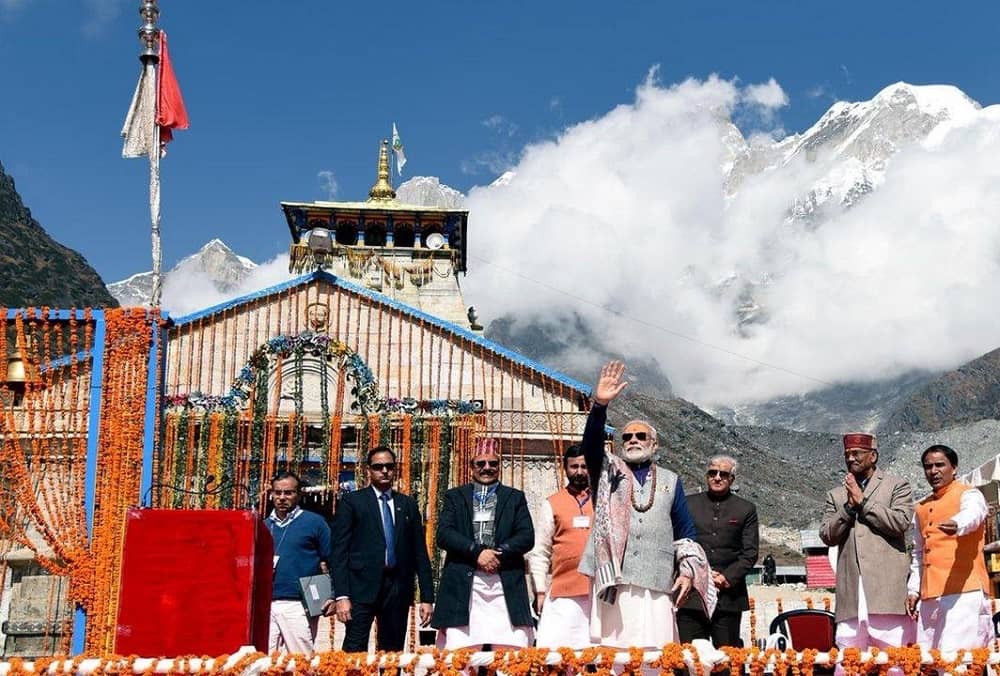
Kedarnath Temple:
Tungnath is a mountain located in Rudraprayag district of Garhwal, Uttarakhand. On this mountain stands the Tungnath Temple, which is one of the Panch Kedars of Lord Bholenath.
It is also believed that Goddess Parvati performed penance here to unite with Lord Shiva. The Tungnath Temple is situated at an altitude of 3,680 meters above sea level. Here, worship is offered to the heart and the arms of Lord Shiva.
According to mythological legends, after the massive killings in the Kurukshetra battlefield by the Pandavas, Lord Shiva was angry with them. To appease Lord Shiva, the Pandavas had the temple constructed.
To get there:
-
-
- By road: Reach Gaurikund, the base camp, and then trek or use local transport.
- By bus: Buses operate from major Uttarakhand cities to Sonprayag, from where you can proceed to Kedarnath. By train:
- From Rishikesh, take a bus or taxi to Gaurikund, then continue to Kedarnath by trekking or local transport.
-
Suggested Read: Urgam Valley: Trek to Kalpeshwar Kedar Temple

Tungnath Temple:
Tungnath is a mountain located in Rudraprayag district of Garhwal, Uttarakhand. On this mountain stands the Tungnath Temple, which is one of the Panch Kedars of Lord Bholenath.
It is believed that Goddess Parvati performed penance here to unite with Lord Shiva. The Tungnath Temple is situated at an altitude of 3,680 meters above sea level. Here, worship is offered to the heart and arms of Lord Shiva.
According to mythological legends, after the massive killings in the Kurukshetra battlefield by the Pandavas, Lord Shiva was angry with them. To appease Lord Shiva, the Pandavas had the temple constructed.
To reach Tungnath:
Trek around 3.5 kilometers (2-3 hours) from Chopta.
-
-
- By air: The nearest airport is Dehradun’s Jolly Grant Airport. From Rishikesh or Haridwar, take a bus or taxi to Chopta.
- By train: The closest railway station is Rishikesh. From there, hire a taxi or take a bus to Chopta.
- By road: Drive from cities like Delhi or Dehradun. Regular bus services operate from Rishikesh or Haridwar to Chopta.
-
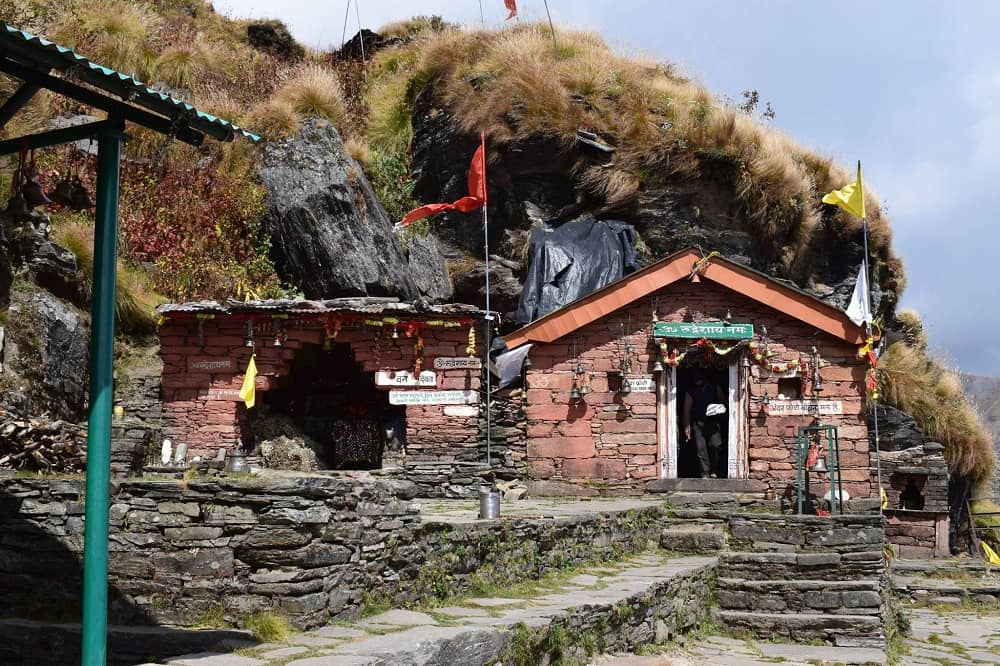
Rudranath Temple:
Rudranath Temple is a temple of Lord Shiva located in Chamoli district of Uttarakhand and is one of the Panch Kedar. Situated at an altitude of 2,290 meters above sea level, the Rudranath Temple is surrounded by magnificent natural beauty.
In this temple, Lord Shankar’s face (Ekanan) is worshipped. From in front of Rudranath Temple, the snow-covered peaks of Nanda Devi and Trishul are visible, enhancing the scenic appeal of the place. The face of Lord Shiva worshipped here is known as Neelkanth Mahadev.
To reach Rudranath:
-
-
- By road: Helang is the nearest town. From Helang, continue the journey by trekking to reach Rudranath.
- By train: The nearest railway station is Rishikesh. Hire a taxi from Rishikesh or take a bus to Helang, then trek to Rudranath.
- By air: From Jolly Grant airport, take a taxi or bus to Helang, then proceed to Rudranath by trekking.
-
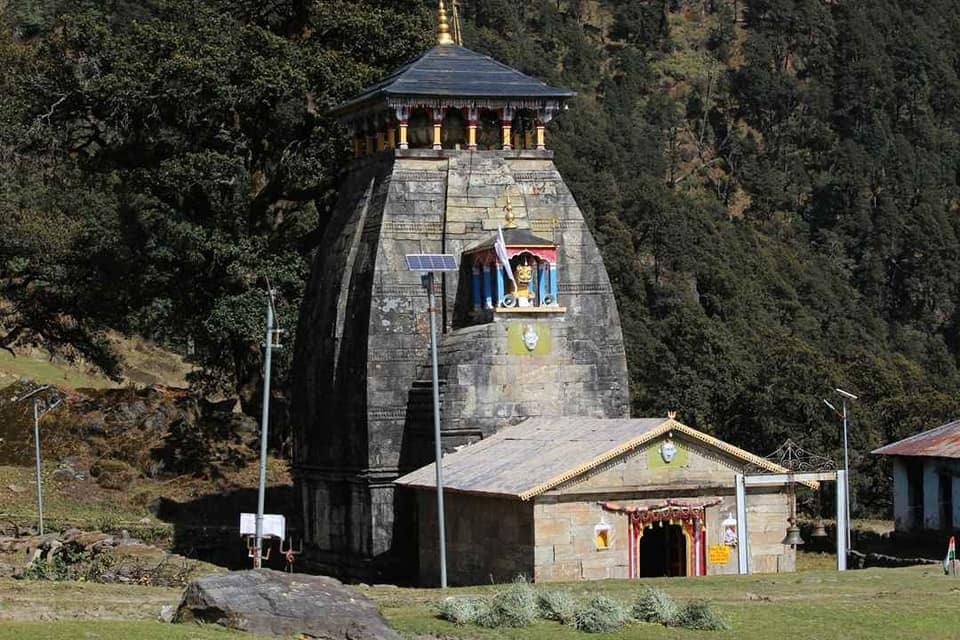 Madhyameshwar temple
Madhmaheshwar
Madhyamaheshwar Temple
Madhyamaheshwar Temple is located near the source (mouth) of the Madhyamaheshwar River. Situated at an altitude of 3,289 meters above sea level, this temple is known as the second Kedar.
In Madhyamaheshwar Temple, Lord Shiva is worshipped in the form of the Navel (Nabhi) Lingam. It is believed that the water here is so sacred that even a few drops are considered sufficient for attaining salvation (Moksha).
During the winter season, the temple remains closed for six months. To reach Madhyamaheshwar, one needs to travel to Ukhrimath in Rudraprayag district. From Rudraprayag, buses and jeeps are available to reach the temple.
The trek to Madhmaheshwar begins from Uniana, around 18 km from Ukhimath. Accommodation options are available after trekking for 3 km at Ransi village, and then at Gaundhar village after an additional 6 km. The total trek distance is 19 km.
To get there:
-
-
- By road: Travel to Uniana, the starting point of the trek to the shrine.
- By train: The nearest railway station is Ukhimath. From there, proceed by road to Uniana and start the trek.
- By air: From Jolly Grant airport, travel by road to Uniana and begin the trek to Madhmaheshwar.
-
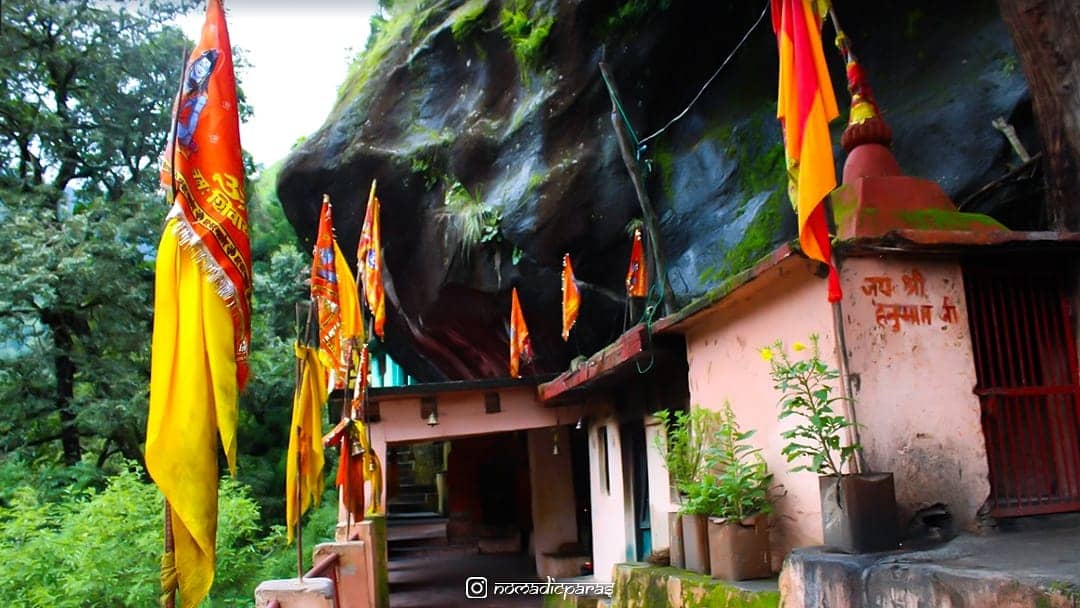
Kalpeshwar:
Kalpeshwar Temple is located in Urmugam Valley, Chamoli district, Garhwal, Uttarakhand, India. This Hindu temple is dedicated to Lord Shiva. Kalpeshwar Temple is one of the Panch Kedars, occupying the fifth position among them. It is situated at an altitude of 2,200 meters (7,217 feet) above sea level.
Kalpeshwar is the only Panch Kedar temple where the doors remain open throughout the year. It is a small temple built inside a stone cave, and it is believed that Lord Shiva’s hair (Jata) manifested here. In this temple, worship is offered to the Jata of Lord Shiva.
To get there:
-
-
- By train: The nearest railway station is Rishikesh, from where you can travel by road to reach Kalpeshwar.
- By road: Motorable roads connect Sagar village to Helang, and then jeeps to Urgam, followed by a short trek to Kalpeshwar.
- By air: Dehradun’s Jolly Grant Airport is the closest, from where you can proceed by road to reach Kalpeshwar.
-
Significance
Hindu devotees hold the Panch Kedar temples in immense reverence, ranking them among India’s foremost pilgrimage destinations. These holy sites represent Lord Shiva’s divine manifestations following the Kurukshetra war. it is the the way for spiritual enlightenment and the cleansing of sins.
Best Time to visit Panch Kedar
Best Month from mid-April to Mid-June or Last week of September to October emerges as the prime window. During this interval, the climate is pleasant and the temple gates swing open for visitors. In contrast, the winter months encounter substantial snowfall, prompting the closure of the temples for safety reasons.
FAQ
- Panch Kedar Ke Naam: Kedarnath, Madhmaheshwar, Tungnath, Rudranath, and Kalpnath.
- Panch Kedar Yatra Package Cost: approx. INR 50000 per person