
Discover Pushkar Brahma Temple Rajasthan India and camel fair 2024
Pushkar, a vibrant and cultural town in Rajasthan, is renowned for two primary attractions: the Pushkar Fair and the Brahma Temple. The Brahma Temple stands out for its exceptional significance. While India boasts numerous temples dedicated to various deities, the Brahma Temple is one of the very few globally dedicated to Lord Brahma, the creator of the universe.
Jagatpita Brahma Mandir is a revered temple dedicated to Lord Brahma, the Hindu God of Creation, and is situated close to the sacred Pushkar Lake. This ancient structure is approximately 2000 years old, although the current building dates back to the 14th century. Despite the presence of over 500 temples in Pushkar, the Brahma Temple is the most significant among them.
Unique Temple: The Brahma Temple in Pushkar is celebrated as one of the rare temples in India dedicated exclusively to Lord Brahma. Unlike other major deities such as Shiva or Vishnu, Lord Brahma is less widely worshiped, making this temple a special and revered site for devotees.
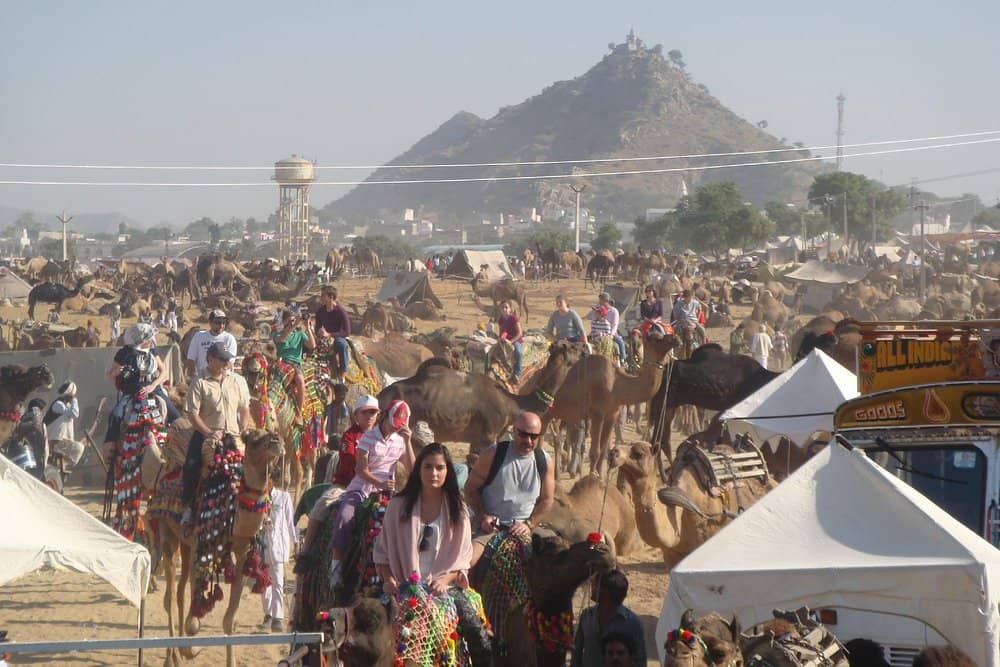
Pushkar Camel Fair 2024
The Pushkar Camel Fair 2024 is a must-see festival for tourists exploring Rajasthan, India. Also known as the Pushkar Fair or Pushkar Mela, this vibrant event began as a cattle trade fair where locals gathered to trade cattle, camels, and horses.
Over the past century, the Pushkar Fair has evolved into a grand celebration of Rajasthani culture and heritage, showcasing a mesmerizing array of colors and traditional festivities.
Held in the sacred city of Pushkar, the fair takes place during the month of Kartik according to the Hindu Lunar Calendar and concludes on Kartik Purnima. The Pushkar Fair usually kicks off between October and November, marking the beginning of the cooler season in Rajasthan. This annual event draws over 200,000 visitors each year, making it one of the top tourist attractions in the state. Pushkar Brahma Temple
Pushkar Camel Fair Highlights
The Pushkar Camel Fair is renowned as one of the world’s largest camel trade fairs, with more than 30,000 camels traded each year. This vibrant event offers a wide range of activities and cultural experiences that highlight the rich heritage of Rajasthan. Pushkar Brahma Temple
Activities at Pushkar Camel Fair
Beyond the bustling cattle and camel trading, the fair features an array of exciting activities, including:
- Folk Music and Dance: Experience traditional Rajasthani folk performances that bring the festival to life.
- Ferris Wheels and Magic Shows: Enjoy amusement rides and enchanting performances that captivate visitors of all ages. Pushkar Brahma Temple
Cultural Events and Competitions:
-
- Tug of War: Competitive games for both women’s and men’s teams.
- Longest Moustache: A fun contest for moustache enthusiasts.
- Matka Phod: A thrilling game where participants aim to break clay pots.
- Bridal Competition: Showcasing traditional bridal attire.
- Rajasthani Group Dance: Group performances showcasing local dance styles.
- Camel Race: An exhilarating race featuring decorated camels.
- Camel Decoration (Gorband): A competition for the most ornately decorated camels.
- Camel Dance Competition: Watch camels perform choreographed routines.
- Wrestling Competition: Traditional wrestling matches.
- Matka Race for Women: A race involving carrying clay pots.
Additionally, enjoy Indian sports competitions like Kabaddi, where locals challenge tourists. Tourists can also participate in contests such as Turban Tying and Tilak Competitions, and the Indian Bride and Groom Competition for foreigners, organized by Rajasthan Tourism. Pushkar Brahma Temple
Religious Aspects
Pushkar holds significant religious importance as the site of the only Brahma Temple in the world. According to Hindu mythology, Lord Brahma, one of the gods in the Hindu Trinity (along with Vishnu and Shiva), dropped a lotus flower here, leading to the city’s name, Pushkar, which means “Blue Lotus Flower.”
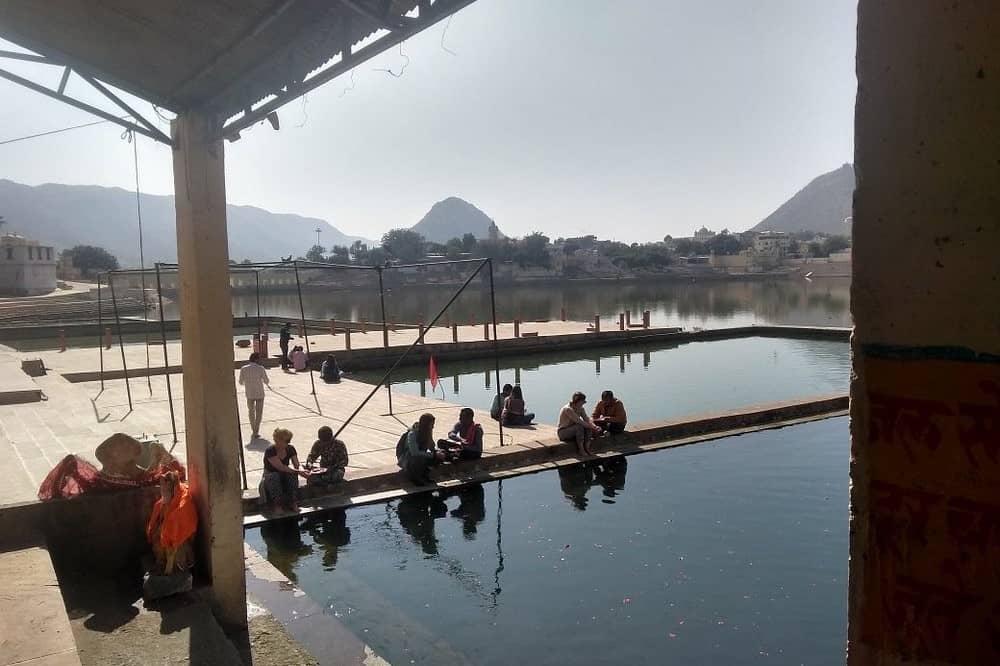
On the eve of Kartik Purnima, hundreds of pilgrims from around the globe gather to take a sacred dip in Pushkar Lake, believed to cleanse them of their sins and bring spiritual salvation. Pushkar Brahma Temple
History: Pushkar Brahma Temple
Pushkar, renowned for its multitude of temples, boasts over 500 temples, including 80 large ones and numerous shrines. Many of these were rebuilt following the destruction during the reign of Mughal Emperor Aurangzeb.
The garbagriha (inner sanctum) of the central Brahma Temple, constructed from stone and marble slabs, dates back to the 14th century. This structure is believed to have been initially built by the legendary Sage Vishwamitra.
It was later renovated by Adi Shankara, and the current modifications were carried out by Maharaja Jawat Raj of Ratlam.
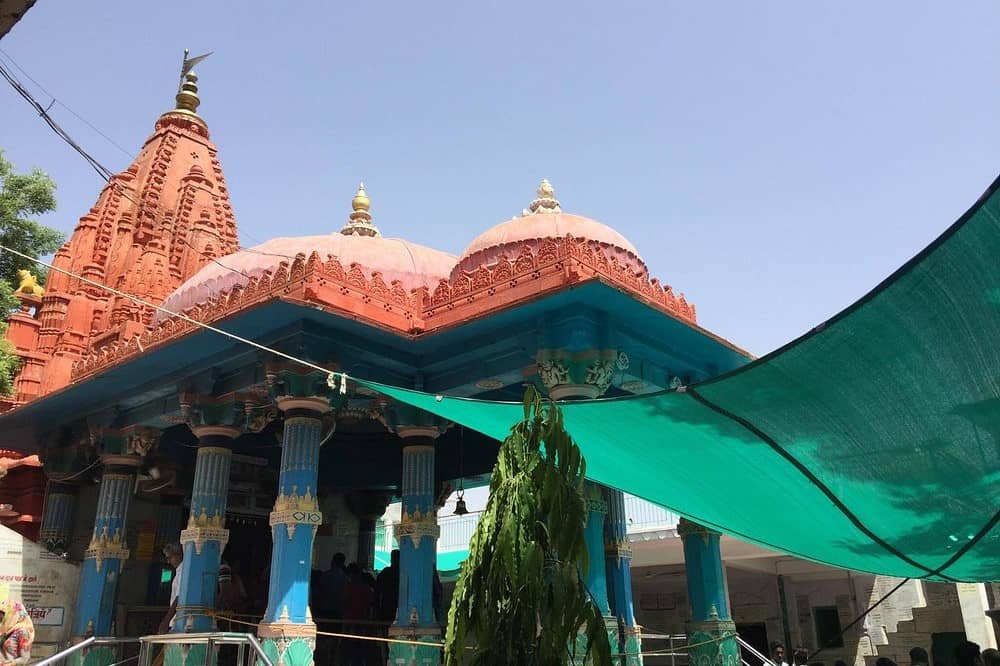
Key features of the temple include its shikhara (tapering top) painted in red, adorned with a captivating Hansa (swan) motif. Both the Pushkar Lake and the Brahma Temple are recognized among the ten most religious sites globally and stand as one of the five sacred pilgrimage places for Hindus.
Pushkar Lake:
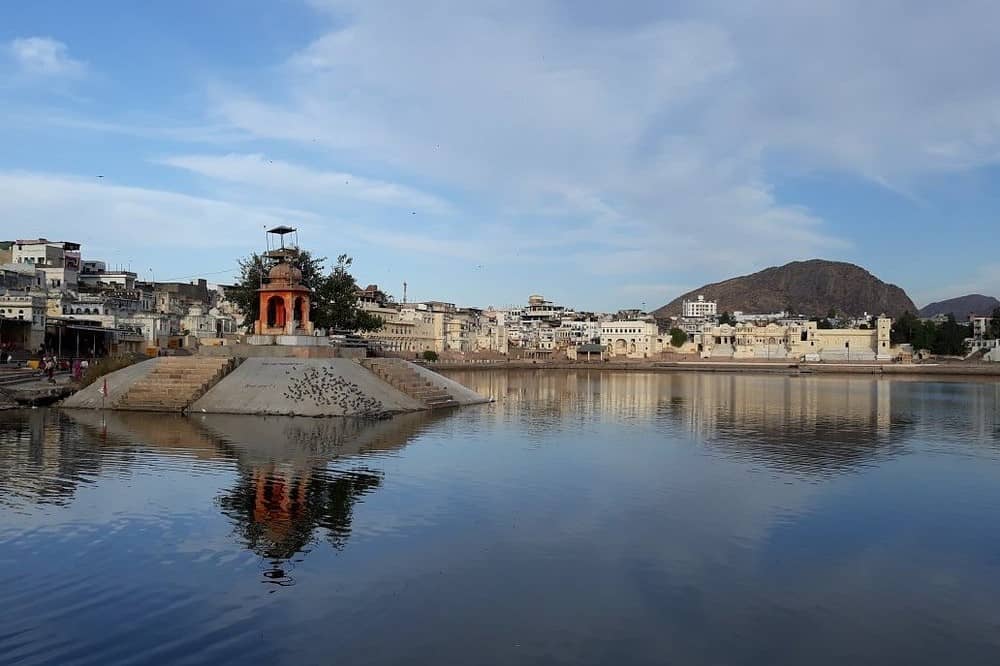
The Brahma Temple is located near the sacred Pushkar Lake, which holds immense religious importance in Hinduism. It is believed that taking a dip in the holy waters of Pushkar Lake during the auspicious Kartik Purnima can cleanse one of sins and bestow divine blessings. Many pilgrims visit the Brahma Temple as part of their ritualistic circuit around the Pushkar Lake.
God: Pushkar Brahma Temple
The Brahma Temple in Pushkar is dedicated to Lord Brahma, the creator of the universe in Hindu mythology. Brahma is part of the Holy Trinity (Trimurti) in Hinduism, alongside Vishnu (the preserver) and Shiva (the destroyer).
The temple’s Brahma idol is crafted from marble and features the deity with four heads, representing the four Vedas (sacred texts of Hinduism). The idol is shown sitting in a cross-legged posture and includes his consort, Gayatri, who is the Goddess of the Vedas.
Suggested Read: Pink City of India: Why is Jaipur Called Pink City in India?
Best Time to Visit Pushkar Brahma Temple
The ideal time to visit the Brahma Temple is during the winter months, from November to February, when the weather is pleasant and favorable for sightseeing. This period also aligns with the Pushkar Camel Fair, an exciting event that enhances the overall travel experience.
Pushkar experiences extremely high temperatures in the summer, often exceeding 40°C, so visiting during this season is not advisable. The monsoon season, from July to September, brings moderate rainfall and fewer crowds, providing a more peaceful and serene experience, though it might be less convenient for travel.
Darshan Timings at Pushkar Brahma Temple
Understanding the darshan timings at the Brahma Temple allows you to immerse yourself in its spiritual ambiance during the most sacred moments. The temple’s schedule offers several opportunities to participate in aartis, darshans, and other rituals, providing a chance to seek blessings.
Here’s a breakdown of the Pushkar Brahma Temple darshan timings:
General Darshan: Pushkar Brahma Temple
-
- Morning: 5:30 AM – 1:30 PM
- Evening: 3:00 PM – 9:00 PM
Mangal Aarti (Before Sunrise):
-
- 5:30 AM – 6:00 AM
Sandhya Aarti (After Sunset):
-
- 6:30 PM – 7:30 PM
Special Pujas:
-
- Morning: 7:00 AM – 9:00 AM
- Evening: 7:00 PM – 8:00 PM
Things to Do Pushkar Brahma Temple
Attend the Aarti: Participate in the daily aarti (prayer ceremony) at the Brahma Temple for a peaceful and spiritually uplifting experience.
-
- Entry Fee: Nil
- Timings: 6 AM–9 PM (Summers), 6:30 AM–9:30 PM (Winters)
- Open Days: 7 days a week
Explore Pushkar Lake: Take a dip in the sacred Pushkar Lake, which is believed to cleanse sins and bring good fortune. This activity is essential for pilgrims.
-
- Entry Fee: Nil
- Timings: 9 AM–6 PM
- Open Days: 7 days a week
Take a Temple Tour: Visit nearby temples like the Savitri Temple, Varaha Temple, and Pap Mochani Temple to enrich your spiritual journey with their unique histories and significance.
Go for a Camel Safari: Experience a camel safari in the surrounding desert for stunning views of the Thar Desert and a fun way to explore the region.
-
- Price: INR 800/person (1 hour). Prices may vary.
- Timings: Open 24×7
- Open Days: 7 days a week
Participate in Festivals: Attend the vibrant Pushkar Camel Fair and other festivals to experience cultural performances, market stalls, and traditional festivities.
-
- Entry Fee: Nil
- Pushkar Camel Fair 2024 Dates: 9/11/2024–15/11/2024
- Timings: 9 AM–5 PM
Dress Code: Pushkar Brahma Temple
While there is no strict dress code, it is advisable to:
- Wear traditional Indian attire (e.g., kurta-pajama or dhoti for men, sarees or salwar kameez for women).
- Avoid Western clothing.
- Remove footwear before entering the temple; use designated storage areas near the entrance.
Poojas and Sevas: Pushkar Brahma Temple
| Pooja/Seva Name | Significance | Timings |
|---|---|---|
| Mangala Aarti | Early morning prayers seeking blessings and divine grace. | Morning: 5:00 AM–6:00 AM |
| Sandhya Aarti | Evening prayers with lamps and incense for protection and blessings. | Evening: 6:30 PM–7:30 PM |
| Abhishekam | Ritual bathing of the deity with sacred ingredients for purification. | Morning: 7:00 AM–9:00 AM |
| Brahma Havan | Fire ritual for prosperity and spiritual awakening. | Morning: 9:00 AM–10:00 AM |
| Purnahuti | Culmination of rituals, marking the completion of sevas. | Morning: After Brahma Havan |
| Shodashopachara | Detailed worship with sixteen offerings to Lord Brahma. | Morning: 10:00 AM–11:30 AM |
| Annadanam | Free food distribution promoting charity and community welfare. | Daily from 12:00 PM onwards |
Entry Fees and Pooja Charges:
- General Entry: Free for all
- VIP Entry: Specific fees may apply for expedited access or special services
Pooja Charges: Pushkar Brahma Temple
- Mangala Aarti: INR 100
- Sandhya Aarti: INR 100
- Abhishekam: INR 200
- Brahma Havan: INR 500
- Shodashopachara: INR 300
- Annadanam: Free (Voluntary donations encouraged)
- Prasadam Distribution: No specific charge; voluntary donations encouraged
Festivals at Pushkar Brahma Temple:
- Kartik Purnima (November): Marks Lord Brahma’s yajna at Pushkar with a holy dip in the lake and prayers.
- Navratri (September/October): Nine-night festival dedicated to Goddess Durga, featuring devotional and cultural events.
- Diwali (October/November): Festival of lights with lamps, special poojas, and cultural programs.
- Holi (March): Grand celebration of colors with traditional rituals.
- Makar Sankranti (January 14): Celebrated with kite flying and special rituals.
Places to Visit Near Pushkar Brahma Temple:
Pushkar Lake: A sacred lake surrounded by 52 ghats. Pilgrims take a holy dip here and enjoy the Pushkar Camel Fair.
-
- Timings: 9 AM–6 PM
Savitri Temple: Situated on a hilltop, dedicated to Goddess Savitri. The trek up offers panoramic views of Pushkar and the desert.
-
- Timings: 5 AM–12 PM, 4 PM–9 PM
Here are some fascinating facts about the Pushkar Brahma Temple Rajasthan India:
- Legendary Origin: According to legend, Lord Brahma descended to earth to perform a yajna (sacrificial ritual) and chose Pushkar as the site for his temple. This adds a deep spiritual significance to the temple’s location.
- Historical Renovations: In the 8th century, Hindu philosopher Adi Shankara undertook the renovation of the temple. However, the current structure was repaired and slightly modified by Maharaja Jawat Raj of Ratlam.
- Architectural Features: The temple is constructed from marble and stone slabs, featuring a striking red pinnacle (shikhara) that stands out from a distance. It also showcases a distinct hamsa (bird) motif, which adds to its unique architectural charm.
- Inner Sanctum: The inner sanctum of the Brahma Temple is dedicated to Lord Brahma and his second wife, Gayatri, highlighting the temple’s deep religious connections.
- Festival Celebrations: During Kartik Poornima and the Pushkar Fair, the town celebrates a grand festival dedicated to Brahma. Devotees visit the temple after bathing and cleansing themselves in the sacred Pushkar Lake, making the occasion a significant religious event.
- Global Recognition: The Brahma Temple has been recognized as one of the ten most religious places in the world and is considered one of the five sacred pilgrimage destinations for Hindus, underscoring its importance in the Hindu religious landscape.
Here’s a concise overview of the temples and attractions near Pushkar:
1. Varaha Temple (Pushkar)
- Dedication: Lord Vishnu’s avatar, Varaha (the boar).
- Features: One of the oldest temples in Pushkar, known for its intricate carvings and serene atmosphere.
- Timings: 6 AM–12:30 PM and 4 PM–8 PM
2. Pap Mochani Temple (Pushkar)
- Dedication: Ekadashi Mata, believed to absolve sins with blessings.
- Features: Located on a hill, offering a peaceful retreat.
- Timings: 6 AM–7 PM
3. Rangji Temple (Pushkar)
- Dedication: Lord Rangji, considered an incarnation of Lord Vishnu.
- Features: A blend of South Indian, Mughal, and Rajput architectural styles.
- Timings: All day long
4. Ajmer Sharif Dargah (Ajmer)
- Dedication: Khwaja Moinuddin Chishti, a famous Sufi saint.
- Features: A renowned Sufi shrine attracting pilgrims from all faiths.
- Entry Fee: Free
- Timings: Open 24×7
5. Ana Sagar Lake (Ajmer)
- Features: An artificial lake popular for boating and picnics. Nearby Daulat Bagh gardens are ideal for strolling.
- Entry Fee: Free
- Timings: 8 AM–8 PM
6. Taragarh Fort (Ajmer)
- Features: Offers panoramic views of Ajmer city and is known for its impressive architecture.
- Entry Fee: INR 100
- Timings: Open 24×7
7. Merta City (50 km from Pushkar)
- Features: Known for its historical and religious significance. Houses the Meera Bai Temple, dedicated to the famous bhakti poet and saint Meera Bai.
Pushkar Best Restaurant: Pushkar Brahma Temple
1. Raju Terrace Garden Restaurant, Main Market Road
- Cuisine: Traditional Rajasthani thali
- Features: Cozy garden setting, relaxed atmosphere
2. Honey & Spice, Laxmi Market
- Cuisine: Healthy vegetarian dishes
- Features: Nutritious meals, welcoming ambiance
3. Sunset Cafe, Choti Basti
- Cuisine: Indian, Italian, and Continental
- Features: Stunning lake views, variety of dishes
4. Out of the Blue, Brahm Chowk
- Cuisine: Indian, Continental, and Israeli
- Features: Eclectic menu, laid-back atmosphere
How to Plan a Trip to Pushkar Brahma Temple
- Accommodation: Book in advance, especially during peak seasons like the Pushkar Camel Fair. Options range from budget hotels to luxury resorts.
- Itinerary: Include temple visits, local market exploration, and nearby attractions. Allocate free time to relax and enjoy the surroundings.
- Activities: Incorporate local experiences like temple aarti, camel safaris, and yoga sessions for a memorable trip.
How to Reach Pushkar Brahma Temple
1. By Train Pushkar Brahma Temple
- Nearest Station: Ajmer Junction (30 minutes from Pushkar)
- Connections: Well-connected to major cities like Delhi, Mumbai, and Jaipur. Trains such as the Shatabdi Express and Rajdhani Express are available.
2. By Road Pushkar Brahma Temple
- Bus Services: Regular buses from Jaipur, Ajmer, and other towns.
- Driving: Pushkar is about 150 km from Jaipur and 400 km from Delhi. Roads are well-maintained, offering scenic views.
3. By Flight Pushkar Brahma Temple
- Nearest Airport: Jaipur International Airport (150 km from Pushkar)
- Connectivity: Regular flights from major cities. Hire an airport taxi in Jaipur for a smooth transfer to Pushkar.