
Incredible Taj Mahal Inside Decoration, Timings & Pictures
Explore the Taj Mahal’s Inside Decoration, Timings, and Pictures
Step inside the Taj Mahal and discover an awe-inspiring world of Mughal artistry, elegant architecture, and timeless romance. Renowned for its architectural symmetry and intricate inlay work, the Taj Mahal’s interior represents the pinnacle of 17th-century craftsmanship and the enduring legacy of Shah Jahan’s love for Mumtaz Mahal.
Highlights of the Taj Mahal Interior
The Mausoleum — The Monumental Heart
- The mausoleum, also called Rauza-i-Munauwara, stands as the centerpiece of the Taj Mahal complex, constructed from dazzling white marble and topped by a grand dome with a gilded finial.
- Its octagonal base and chamfered corners are designed to guide the eye towards the sacred tomb chamber inside.
- Four symmetrical minarets frame the structure, emphasizing balance and grandeur.
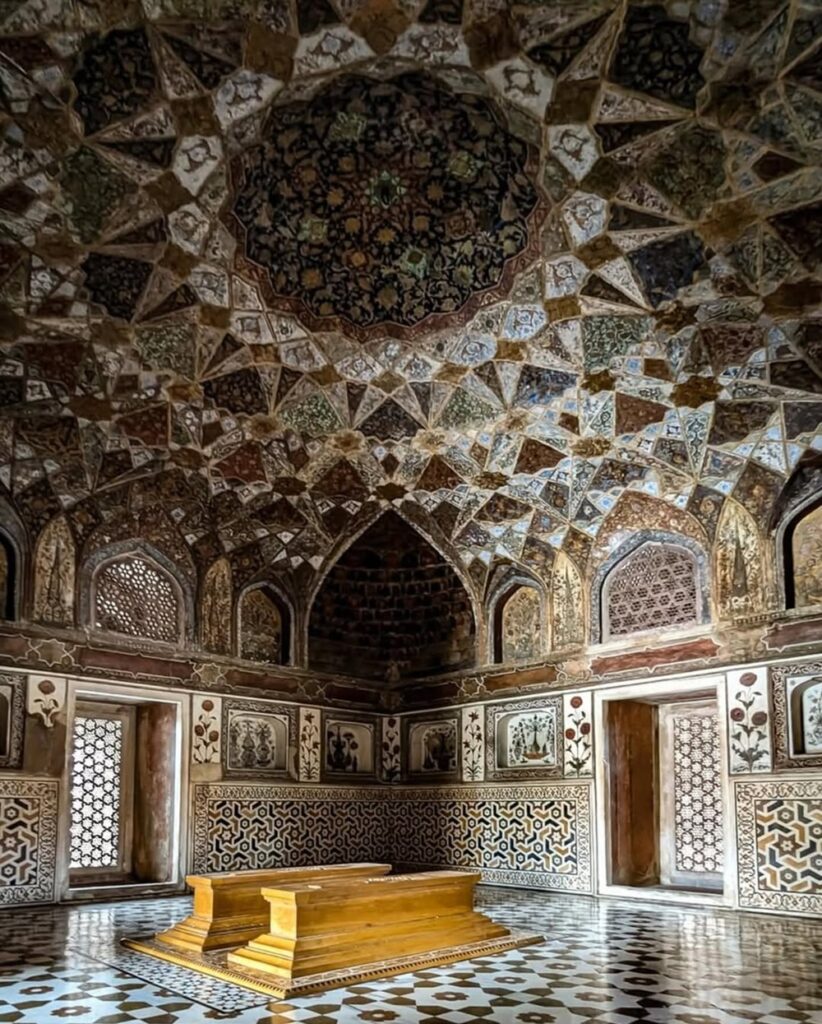
The Central Tomb Chamber — Pinnacle of Mughal Craft
- At the core lies a double-storied, domed hall—a perfect octagon, measuring 24 feet on each side.
- The chamber showcases octagonal marble lattice screens (Jali), meticulously carved and inlaid with semi-precious stones in floral and vine motifs, showcasing the pietra dura technique at its finest.
- The cenotaphs of Mumtaz Mahal and Shah Jahan rest in the main chamber. The true graves lie in the simpler lower tomb chamber, directly beneath these upper cenotaphs.
- Walls soar to 25 meters (82 ft) and are adorned with detailed calligraphy panels, dado bas-reliefs, and a “false” interior dome featuring a radiant sun motif.
- Natural light streams through perforated marble screens and roof openings, enhancing the serene and ethereal ambiance.
“The inner domed hall of the mausoleum represents the climax of the Taj Mahal’s architectural journey. This perfect octagonal space… features two tiers of radiating niches that provide an ethereal light and create an echo that reverberates throughout the building.“
Lower Tomb Chamber — Sacred Sanctuary
- Not accessible to visitors, this chamber is clad entirely in white marble.
- The cenotaphs here are decorated with Qur’anic inscriptions, featuring Allah’s 99 names, and intricate but restrained floral cartouches.
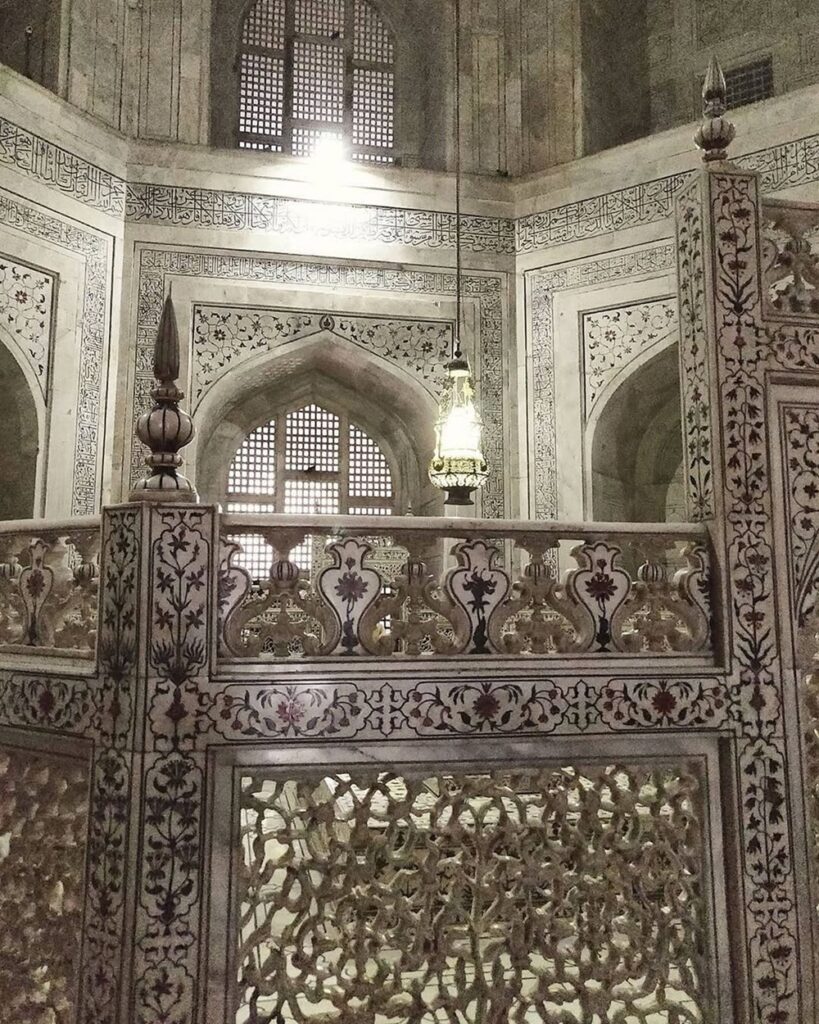
Marble Screen (Jali) — The Jewelled Barrier
- Originally crafted in enameled gold, the current marble screen was made in 1643 due to the original’s excessive value.
- The octagonal screen encircling the cenotaphs is inlaid with semi-precious stones, forming highly detailed, organic plant arabesques that symbolize paradise.
- Since 1994–95, the screen is protected by a wooden frame with an aluminum grille to prevent damage.
Exquisite Inlay Work and Calligraphy
- Pietra dura inlay and lapidary work utilizing precious and semi-precious stones create visually stunning floral motifs throughout the chamber.
- Arabic calligraphy featuring verses from the Qur’an adorns both the cenotaphs and chamber walls, further enhancing the spiritual atmosphere.
Ambulatory Rooms (“Shish Mahal”)
-
Surrounding the main chamber are several rooms known as ‘Shish Mahal’ (Mirror Palace), characterized by intricate marble and glasswork. These are not open to the public but reflect the Mughal penchant for decorative luxury.
Photographs and Visuals
- Hundreds of high-resolution photos of the Taj Mahal interior, including the mausoleum, lattice screen, and cenotaphs, are available online through reputable photo archives and stock image services.
- Videos and rare photographic tours offer detailed glimpses of the central chamber and intricate marble craftsmanship.
Timings for Visitors
- The Taj Mahal is generally open from sunrise to sunset (about 6:00 AM to 6:30 PM) every day except Fridays, when it is reserved for prayer.
- Night viewing is permitted on selected days, especially during the full moon and two nights before and after, but pre-booking is required.
- Recommended visit time is early morning for fewer crowds and magical lighting conditions.
Entry Guidelines & Tickets
- Entry to the central chamber is included in your main Taj Mahal ticket, with a possible surcharge during peak times.
- Tickets can be purchased at the gates or online via the official Taj Mahal website or Indian tourism portals.
- Strict security checks are in place; photography rules may vary—be sure to check updated policies before your visit.
Experience the Taj Mahal’s inside decoration—a harmonious blend of floral artistry, calligraphy, marble latticework, and sacred geometry—all forming an enduring testimony to love and Mughal architectural genius
Explore the exquisite Taj Mahal inside decoration, a monumental example of Mughal artistry and design. Known for its stunning symmetry and intricate detailing, the Taj Mahal is a beacon of architectural brilliance and serene beauty.

The Mausoleum: The Heart of the Taj Mahal
- The mausoleum, also known as Rauza-i-Munauwara, Rauza-i-Muqqadas, and Rauza-i-Mutahhara, is the centerpiece of the Taj Mahal complex.
- Dominating the site with its white marble grandeur, it sits at the northern end of a vast, oblong walled complex, subtly descending toward the Yamuna River.
- The mausoleum’s design features a large, multi-chambered cube with chamfered corners, an octagonal base, and an elegant dome topped with a finial.
- Framed by four minarets, this symmetrical structure is meticulously crafted to direct the eye towards the tomb chamber within.
Taj Mahal Inside Tomb
- The central tomb structure is a white marble edifice, standing on a square plinth. Its design incorporates a symmetrical building with an Iwan (arch-shaped doorway) crowned by a dome and finial.
- This tomb is characterized by its Persian-inspired elements and symmetrical design, including massive Pishtaqs (vaulted archways) and arched balconies.
- The main chamber houses the cenotaphs of Mumtaz Mahal and Shah Jahan, with the actual graves located below in the lower tomb chamber.
The Tomb Chamber
The inner domed hall of the mausoleum represents the climax of the Taj Mahal’s architectural journey. This perfect octagonal space, measuring 24 feet on each side, features two tiers of radiating niches that provide an ethereal light and create an echo that reverberates throughout the building.
The floor is adorned with intricate geometrical patterns in black and white marble, bordered by decorative cartouches. The cenotaph of Mumtaz Mahal is surrounded by luxurious vases filled with flowers, including Mughal favorites like irises and tulips, adding to the serene beauty of the space.
Suggested Read: Taj Mahal Visiting Hours, Entry Timings and Ticket Price

The Lower Tomb Chamber:
You access the lower tomb chamber by a stairway from the southern entrance room. This rectangular chamber is clad entirely in marble. The cenotaphs of Mumtaz Mahal and Shah Jahan rest here, their decorations simpler than those above. Qur’anic verses and intricate floral motifs are engraved on the lower cenotaphs, reflecting the sanctity and elegance of the site.
Decoration Screen and Cenotaphs: Taj Mahal Inside
A remarkable marble screen surrounds the cenotaphs. This architectural marvel features intricate Jalis—perforated screens—adorned with organic plant arabesques. The original enameled gold screen was replaced in 1643 by the existing marble one due to its high cost. The screen’s octagonal shape and detailed elements enhance the paradisiacal symbolism of the Taj Mahal, making the cenotaphs of Mumtaz Mahal and Shah Jahan a stunning focal point.
Both cenotaphs receive exquisite inlay and floral decoration. Mumtaz Mahal’s cenotaph carries Qur’anic inscriptions alongside delicate flower patterns. Shah Jahan’s cenotaph, added later, features intricate flower and scroll motifs that enhance its grandeur. Both embody the exceptional Mughal decorative tradition and artistic opulence.
Ambulatory Rooms (‘Shish Mahal’)
Ambulatory rooms, known as ‘Shish Mahal’ or Mirror Palace, encircle the central tomb chamber. These are separated by Jalis filled with glass panes that create a dazzling effect. Although closed to the public, their elegant design echoes the Taj Mahal’s signature craftsmanship and offers insight into Mughal artistry.
Every aspect of the Taj Mahal’s interior design contributes to its majestic, serene ambiance, perfectly representing the grandeur of Mughal architecture.
A Timeless Symbol of Eternal Love
The Taj Mahal, designated as a UNESCO World Heritage Site, stands as a powerful icon of India’s cultural richness and Mughal architectural excellence.
Positioned on the southern bank of the Yamuna River in Agra, Uttar Pradesh, this white marble masterpiece was commissioned by Mughal emperor Shah Jahan in memory of his wife, Mumtaz Mahal, who died in 1631.
Architectural Marvel
The Taj Mahal is celebrated as the epitome of Mughal architecture, seamlessly blending Indian, Persian, and Islamic styles. The main gateway, symmetrical mosque, and lush gardens work together to produce a unified, harmonious vision. A central dome rises to 240 feet (73 meters), its hue changing with sunlight, enhancing the structure’s ethereal beauty. The marble surfaces glow with pietra dura—intricate inlay with semi-precious stones—and Arabic calligraphy, making the Taj Mahal one of the world’s most dazzling artistic achievements.
The Legacy of Love and Artistry
Within the Taj Mahal, the cenotaphs of Mumtaz Mahal and Shah Jahan are enclosed by delicate filigree marble screens. Their actual graves lie in the lower chamber beneath the cenotaphs. Four minarets at the platform’s corners reinforce the building’s visual harmony and monumental dignity.
Visitor Experience inside the Taj Mahal
Millions are drawn each year to admire the Taj Mahal’s breathtaking architecture and storied past. Visitors stroll its grand gardens, marvel at intricate marble carvings, and gaze at the monument reflected in tranquil pools.
Challenges and Preservation
The Taj Mahal’s luminous marble faces threats from industrial and vehicular pollution. Since the 20th century, India has responded with conservation measures and restoration programs to protect this national treasure. Despite environmental pressures, the Taj Mahal endures as a global icon of India’s history and cultural diversity.
Taj Mahal Inside Taj Mahal Inside Taj Mahal Inside Taj Mahal Inside