
The Road to Adi Kailash Om Parvat: A Pilgrimage Made Easier
The Himalayan state of Uttarakhand holds immense spiritual significance for devotees of Lord Shiva. Among its most sacred destinations are Adi Kailash and Om Parvat, believed to be the divine resting place of Lord Shiva and Goddess Parvati during their journey to Mount Kailash, where they intended to attain Samadhi.
Located at a high altitude (often cited around 5,900+ meters for the peak), Adi Kailash Om Parvat was once accessible only through long, physically demanding treks that took several days. Today, thanks to major road infrastructure development, this ancient pilgrimage has become far more accessible—without diminishing its spiritual essence.
Adi Kailash Elevation
-
Adi Kailash (Jyolingkong Peak) elevation: approx. 5,945–6,300 meters
-
Darshan points: Around 4,600–4,700 meters near Jolingkong & Parvati Sarovar
The Road to Adi Kailash – A Game Changer
In earlier times, pilgrims had to walk for 5–7 days through rugged Himalayan terrain to reach Adi Kailash. The construction of a motorable road up to Lipulekh sector has transformed this journey.
Today, large portions of the route are accessible by vehicle, making the pilgrimage feasible for:
-
Senior citizens
-
Families
-
Spiritual seekers unable to trek long distances
This development has also generated employment and economic opportunities for local Himalayan communities—an example of infrastructure serving both faith and livelihoods.
Suggested Read: Pithoragarh to Mansarovar: All About New Route
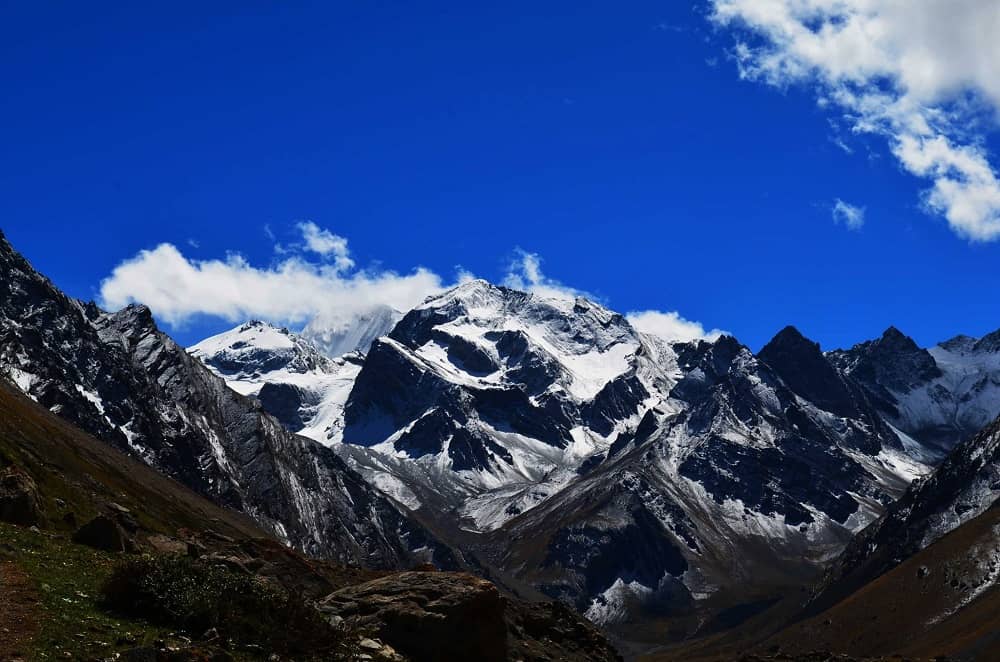
Dharchula to Tawaghat: Gateway to the Yatra
The journey begins at Dharchula, following the Sharda (Kali) River valley.
-
Dharchula to Tawaghat: Fully motorable
-
This stretch opens access to previously unreachable high-altitude regions
-
A crucial lifeline for pilgrims heading toward Adi Kailash and Om Parvat
Adi Kailash and Mount Kailash Darshan Route
The routes for:
-
Adi Kailash & Om Parvat (India)
-
Mount Kailash Mansarovar (Tibet)
remain common up to Gunji village.
At Gunji, the path diverges:
-
One road leads to Adi Kailash (Jolingkong & Parvati Sarovar)
-
Another leads to Om Parvat (Nabhidang)
-
The Tibet route toward Mount Kailash remains closed due to geopolitical reasons
Even so, pilgrims can still witness Mount Kailash from Indian territory near Lipulekh, a moment of deep spiritual significance.
Suggested Read: Mount Kailash View Point in Uttarakhand
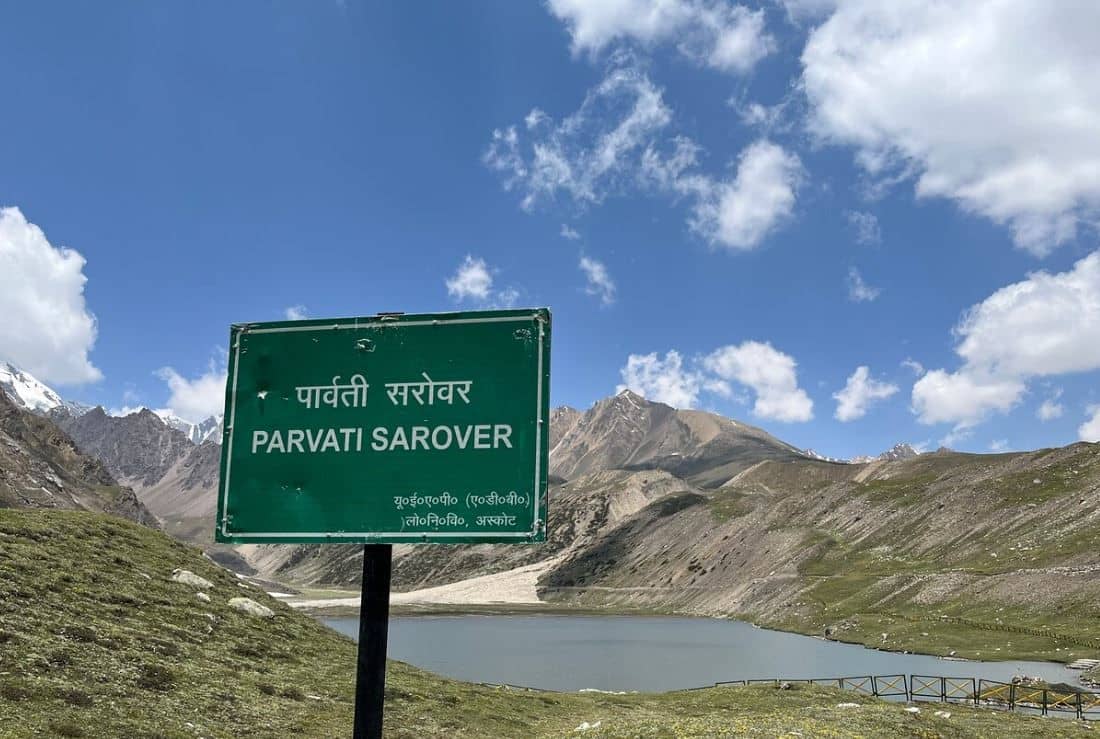
Lipulekh: The Tri-Junction of Faith & Geography
Lipulekh Pass lies near the India–Nepal–Tibet tri-junction. While access beyond this point is restricted, the area offers:
-
Views of sacred Himalayan peaks
-
Strategic and mythological importance
-
Proximity to Om Parvat and Old Lipulekh
Parvati Sarovar & Mythological Faith
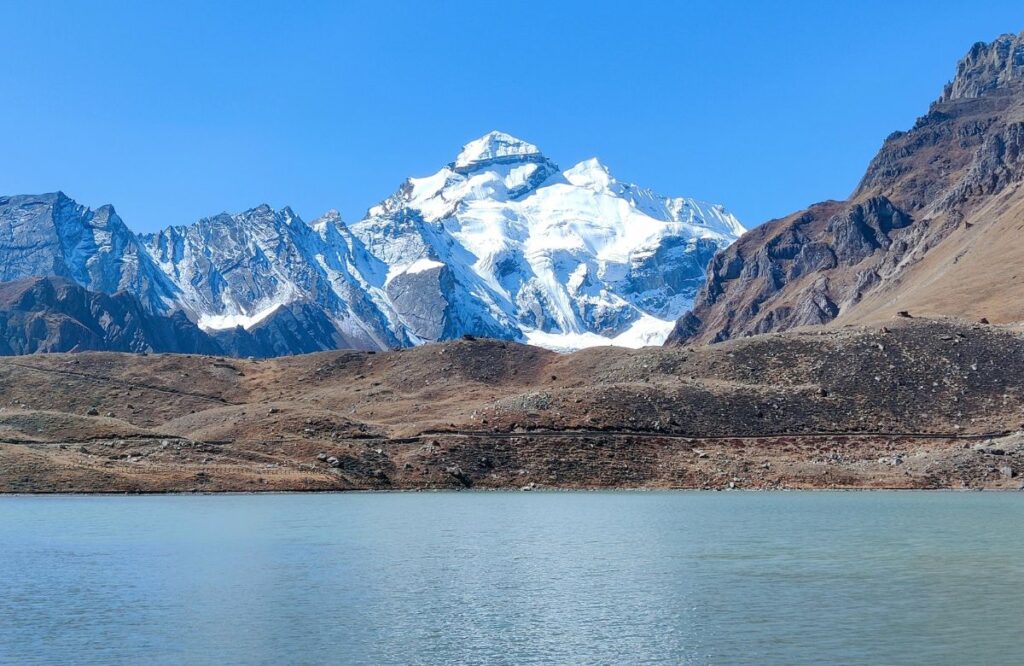
According to Hindu mythology:
-
Lord Shiva and Parvati rested at Adi Kailash
-
Parvati Sarovar (Parvati Kund) marks the place where Goddess Parvati bathed
-
A small temple near the lake is revered by pilgrims
The calm reflection of Adi Kailash in Parvati Sarovar creates a deeply meditative atmosphere that many pilgrims describe as life-changing.
Adi Kailash to Om Parvat Distance
-
Adi Kailash to Om Parvat distance: ~20–25 km
-
Both can be covered in 2–3 days comfortably
-
Roads connect most of the route, with short walks at viewpoints
Pithoragarh to Adi Kailash Om Parvat Distance
-
Pithoragarh → Dharchula: ~95 km
-
Dharchula → Gunji: ~90 km
-
Gunji → Adi Kailash / Om Parvat: ~20–25 km
-
Total distance: ~210–220 km
Haldwani to Adi Kailash Om Parvat
-
Haldwani → Pithoragarh: ~190 km
-
Haldwani → Dharchula: ~290–300 km
Haldwani acts as a major rail and road hub for pilgrims from plains.
Delhi to Adi Kailash Om Parvat
Delhi to Adi Kailash Om Parvat Distance
-
Delhi → Haldwani: ~290 km
-
Delhi → Dharchula: ~520 km
-
Delhi → Gunji: ~610 km
-
Total distance: ~630–650 km
Travelers usually break the journey at Haldwani, Pithoragarh, or Dharchula.
In Conclusion
The road to Adi Kailash Om Parvat has redefined this sacred pilgrimage. What was once an arduous multi-day trek is now a spiritually enriching journey accessible to a wider range of devotees—without losing its mystical charm.
Though access to Mount Kailash in Tibet remains restricted, Adi Kailash and Om Parvat in Uttarakhand continue to offer a powerful alternative—combining faith, mythology, Himalayan beauty, and improved connectivity.
This pilgrimage is no longer just about reaching a destination—it is about experiencing Lord Shiva’s realm from Indian soil, with comfort, reverence, and awe.