
Rishikesh Rajaji National Park: Complete Travel Guide (2026)
Located right next to the spiritual hub of Rishikesh, this tiger reserve offers a rare opportunity: within the same trip, you can experience Ganga aarti, yoga retreats, and a raw jungle safari filled with elephants, leopards, and rich biodiversity.
This detailed guide is designed to help you rank your travel plan perfectly—whether you’re a tourist, blogger, or vlogger aiming to explore Rajaji like a pro.
What is Rajaji Tiger Reserve?
Rajaji Tiger Reserve was officially formed by merging three wildlife sanctuaries—Rajaji, Motichur, and Chilla—and later upgraded into a tiger reserve in 2015 under the Wildlife Protection Act.
📍 Location: Foothills of the Shivalik Hills
📏 Total Area: ~1075 sq. km (including buffer zone)
🌿 Ecosystem: Indo-Gangetic monsoon forest
The park is named after C. Rajagopalachari, one of India’s most respected freedom fighters.
Why “Rishikesh Rajaji National Park” is Trending
Unlike crowded wildlife destinations, Rajaji offers:
✔ Less commercialized safari experience
✔ Easy access from Rishikesh (20–30 km)
✔ High chance of elephant sightings
✔ Diverse landscapes: riverbanks, Sal forests, grasslands
It also acts as the ecological backbone of nearby cities like
- Dehradun
- Haridwar
- Rishikesh

Flora: The Forest That Breathes Life
Major Forest Types:
- Semi-evergreen forests
- Moist deciduous forests
- Terai grasslands
- Riverine vegetation
Dominant Trees:
- Sal (Shorea robusta) – covers most of the forest
- Shisham, Khair, Arjun
- Palash (Flame of the Forest)
- Amaltas (Golden Shower tree)
This mix creates ideal habitats for both herbivores and predators, making the safari exciting and unpredictable.
Wildlife Experience: What You’ll Actually See
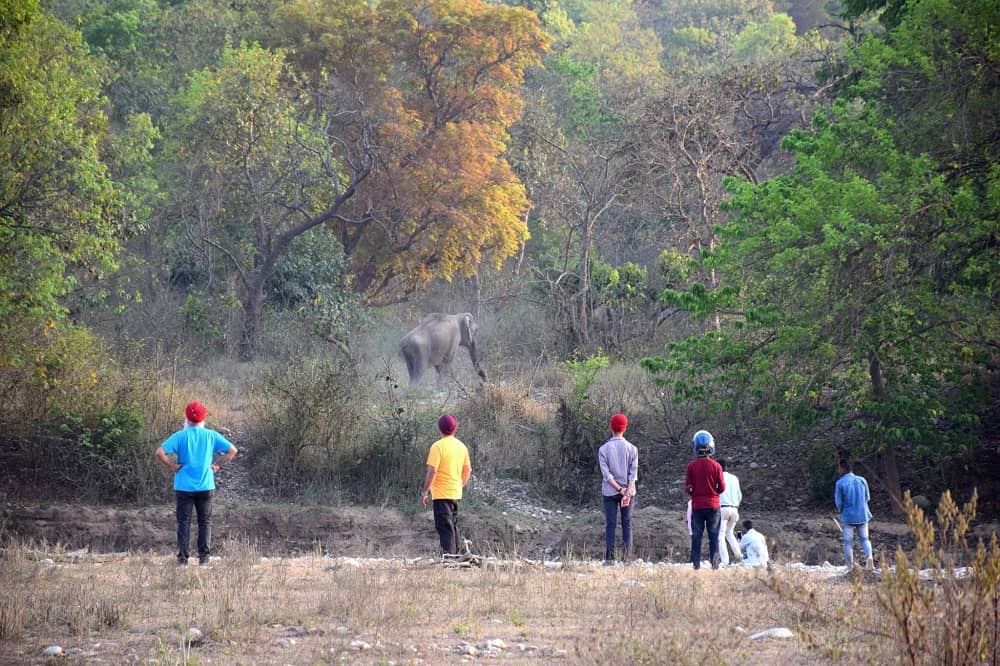
🐘 Elephants – The Star Attraction
- Frequently spotted in Chilla and Haridwar zones
- Often seen in herds crossing forest roads
- Best time: early morning safari
🐅 Tigers – Rare but Present
Tiger sightings are not as common as in Corbett, but the thrill lies in tracking their presence through pugmarks and alarm calls.
🐆 Leopards
More frequently sighted than tigers, especially in:
- Motichur zone
- Dense sal forests
Other Mammals:
- Sloth Bear & Himalayan Black Bear
- Striped Hyena
- Goral (mountain goat)
- Sambar & Spotted Deer
- Wild Boar
🐦 Birdlife (315+ species)
Rajaji is a paradise for birdwatchers:
- Great Hornbill
- Crested Kingfisher
- Red Junglefowl
- Migratory ducks (winter season)
Best Safari Zones Near Rishikesh
1. Chilla Zone – Best Overall Experience
- Closest to Rishikesh & Haridwar
- High elephant density
- Scenic Ganga canal routes
- 2.5-hour safari circuit
👉 Best for beginners & photographers
2. Motichur Zone – Dense Jungle Feel
- Thick sal forest
- Good for leopard sightings
- Rich birdlife
👉 Ideal for serious wildlife lovers
3. Ramgarh Zone – Offbeat Experience
- Less crowded
- Close to Dehradun
- Peaceful safari
👉 Perfect for slow travel & nature immersion
4. Chillawali / Mohand Range
- Located on Delhi–Dehradun highway
- Known for deer sightings
- Easy access for road travelers
5. Jhilmil Zone ( Recommended )
Unlike the dense Sal forests of Chilla or Motichur, Jhilmil offers a completely different ecosystem—wetlands and grasslands, making it a paradise for rare wildlife sightings.
Why Jhilmil Range is Special
Jhilmil is officially known as the Jhilmil Jheel Conservation Reserve, and it is one of the best places in India to see Barasingha (Swamp Deer) in the wild.
What Makes It Unique:
- Only swamp deer habitat in Uttarakhand
- Rare wetland ecosystem inside Rajaji Tiger Reserve
- Less crowded = more peaceful safari experience
- Rich in birdlife and open landscape photography

Safari Booking Guide (Step-by-Step)
How to Book:
- Choose zone (Chillawali recommended)
- Select date & time slot
- Book jeep (shared or private)
- Carry valid ID
Capacity:
- 5–6 people per gypsy
Duration:
- 2–3 hours per safari
Safari Timings (Season-Wise)
| Season | Morning | Evening |
|---|---|---|
| Feb–Apr | 6:00–7:30 AM | 2:00–3:30 PM |
| Apr–Jun | 5:30–7:00 AM | 3:00–4:30 PM |
⏱ Always reach gate 20 minutes early
Entry Fees & Cost Breakdown
- Entry Fee: ₹150 (Indian)
- Vehicle Entry: ₹250 approx.
- Gypsy Cost: ₹2000–₹3500 (depends on zone & demand)
👉 Pro Tip: Share gypsy to reduce cost
How to Reach Rajaji from Rishikesh
🚗 By Road
- 20–30 km from Rishikesh
- Easily accessible via taxi or self-drive
✈️ By Air
- Jolly Grant Airport
🚆 By Train
- Haridwar Junction
- Rishikesh Railway Station
Best Time to Visit Rajaji National Park
🌞 March – June (BEST)
- Dry season
- Maximum wildlife sightings
❄️ November – February
- Pleasant weather
- Ideal for birdwatching
🌧️ Monsoon (Closed)
- 16 June to 14 November
Unique Experiences You Shouldn’t Miss
✔ Elephant herd crossing at sunrise
✔ Birdwatching near riverbeds
✔ Forest silence with alarm calls
✔ Watching Ganga flowing through jungle
Stay Options Inside & Near Rajaji
- Forest Rest Houses: Chilla, Motichur, Ranipur
- GMVN guest houses
- Hotels in Rishikesh
👉 Staying inside forest gives authentic jungle experience
Travel Tips (From Real Experience)
✔ Always choose morning safari
✔ Wear earthy colors (avoid bright clothes)
✔ Carry binoculars for birdwatching
✔ Stay silent during safari
✔ Book in advance during peak season
Why Rajaji is Better Than You Think
Most travelers skip Rajaji thinking it’s “less famous”—but that’s exactly why it’s special.
👉 Less crowd = better wildlife experience
👉 Raw jungle feel = real adventure
👉 Close to Rishikesh = perfect combo trip
Final Conclusion
Rishikesh Rajaji National Park is not just a wildlife destination—it’s a complete experience of nature, silence, and adventure.
In one trip, you can:
- Meditate by the Ganga
- Attend evening aarti
- Go deep into a tiger reserve
Few places in India offer this balance.
Rishikesh Rajaji National Park Rishikesh Rajaji National Park Rishikesh Rajaji National Park Rishikesh Rajaji National Park Rishikesh Rajaji National Park Rishikesh Rajaji National Park Rishikesh Rajaji National Park