
Uttarakhand Himalayas · Guided Trekking Journey
6-Day Gomukh Gangotri Trek from Rishikesh
Follow the Bhagirathi valley from the apple orchards and mountain villages of Harsil to Gangotri, Chirbasa, Bhojwasa and the dramatic glacial landscape of Gomukh—the source area of the Bhagirathi, the principal headstream of the Ganga.
A Journey to the Glacial Valley
Experience the Gomukh Gangotri Trek
The Gomukh Gangotri Trek combines a scenic Himalayan road journey with several days of trekking inside the Gangotri region. Starting from Rishikesh, the route travels through Uttarkashi and Harsil before reaching Gangotri Temple, the trailhead for the walk towards Chirbasa, Bhojwasa and Gomukh.
Gomukh—also written as Gaumukh—is the snout area of Gangotri Glacier and the source area of the Bhagirathi River. Here, the landscape changes from forested slopes to rocky moraine, high mountain ridges and views of the Bhagirathi peaks. This is a demanding high-altitude environment, so a good itinerary needs realistic walking times, appropriate acclimatisation, official permissions and flexibility for weather or trail conditions.
This page describes the six-day Gomukh itinerary supplied for this tour. It reaches Gomukh and returns to Bhojwasa; it does not include an ascent to Tapovan. If your goal is the full Gomukh Tapovan Trek, ask us about a longer itinerary with a qualified guide, specific permit approval and the extra equipment and overnight arrangements required.
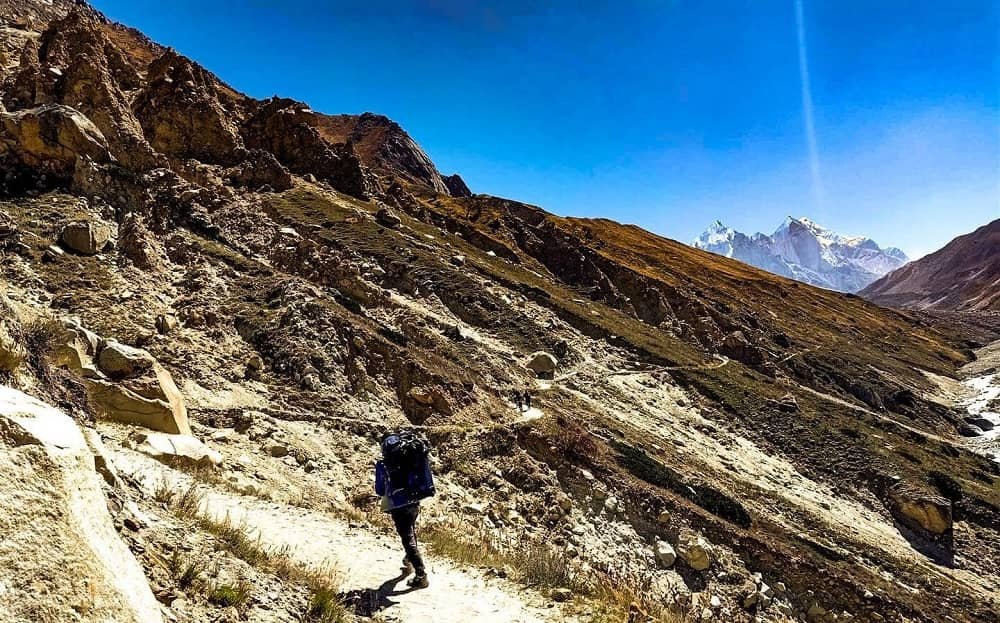
The trail towards Gomukh crosses exposed mountain terrain. Follow the guide’s instructions and local restrictions.
Why This Trek Is Special
From Sacred Gangotri to the Glacier Valley
For many travellers, Gomukh is both a pilgrimage and a mountain adventure. The journey passes through the sacred setting of Gangotri, the pine-lined stretch around Chirbasa and the broad, rugged valley near Bhojwasa. The Bhagirathi peaks and the surrounding glacial terrain create a powerful sense of scale.
Harsil adds a cultural dimension before the trek begins. Its apple orchards, river scenery and nearby Bagori village offer a glimpse of life in the upper Bhagirathi valley. Visitors should be respectful around homes, temples and community spaces and should ask before photographing people.
- Visit Gangotri Temple before entering the trekking route.
- Walk through Chirbasa and Bhojwasa in the high Himalayan landscape.
- Reach Gomukh, subject to permits, weather and trail conditions.
- Learn how the Gomukh route differs from the longer Gomukh Tapovan Trek.
The Route at a Glance
Six Days Through the Upper Bhagirathi Valley
Driving distances and trekking times are approximate planning figures. They can change with road conditions, permit timings, weather, group pace and the condition of the trail.
Rishikesh to Harsil
Meet your driver in Rishikesh and begin the mountain drive towards Harsil via the Uttarkashi region. The road follows river valleys and climbs into the higher Himalayas; journey times can be longer during busy pilgrimage periods or after rain.
After checking in, rest and, if time and conditions allow, take a gentle walk around Harsil. The nearby Bagori village is known for its local cultural heritage. Keep the evening relaxed, prepare your trekking gear and drink water regularly before the following day’s drive to Gangotri and trek.
Harsil to Gangotri, then trek to Bhojwasa via Chirbasa
Start early and drive to Gangotri. Visit Gangotri Temple if timing and local arrangements permit, then complete the required park-entry checks before beginning the trek. The trail passes through the Chirbasa area and continues to Bhojwasa beside the Bhagirathi valley.
This is a long trekking day at altitude. Walk at a steady pace, take short breaks, and follow the guide’s instructions around exposed sections and loose ground. Bhojwasa is the overnight stop; accommodation may be basic and must be confirmed in advance. Do not assume that a particular guesthouse or camp is available without confirmation.
Bhojwasa to Gomukh and return to Bhojwasa
After an early start, walk towards Gomukh over a rocky, uneven trail. The final section may involve loose stones and boulder hopping, and progress depends on the condition of the route. At Gomukh, observe the glacier from the permitted and safe viewing area. The glacier is dynamic; never approach unstable ice, enter restricted zones or cross streams without the guide’s approval.
Spend time appreciating the glacial valley and surrounding peaks, then retrace the route to Bhojwasa. This is not a day to rush. Your guide may shorten or cancel the visit if weather, altitude symptoms or trail conditions make it unsafe.
Bhojwasa to Gangotri
After breakfast, retrace the trail via Chirbasa to Gangotri. The long descent still requires care: loose stones and uneven ground can be tiring on the knees, especially after the previous day’s excursion. Keep your pace comfortable and maintain distance from exposed trail edges.
On arrival in Gangotri, check in to your accommodation and rest. If you have energy and the temple is open, you may have time for a short visit, depending on arrival time and local rules.
Gangotri to Uttarkashi
After breakfast, drive down the valley towards Uttarkashi. Depending on road and weather conditions, you may stop at Gangnani hot springs or viewpoints along the route. Stops are optional and should not delay the drive if road conditions or daylight require an earlier arrival.
In Uttarkashi, visit Kashi Vishwanath Temple if time permits. The rest of the day is for recovery, a warm meal and a comfortable night’s sleep before returning to Rishikesh.
Uttarkashi to Rishikesh
Have breakfast, check out and begin the return drive to Rishikesh. Journey time depends on traffic, roadworks and weather. Please avoid scheduling a tight onward train or flight connection without a generous buffer.
On arrival in Rishikesh, the six-day Gomukh Gangotri tour concludes.
Understand the Difference
Gomukh Gangotri Trek vs. Gomukh Tapovan Trek
These names are often used interchangeably online, but the routes are not identical. The itinerary on this page visits Gomukh from Bhojwasa and returns to Bhojwasa before trekking back to Gangotri. It does not include the steep, demanding ascent from the Gomukh area to Tapovan.
The Gomukh Tapovan Trek continues beyond Gomukh to the high alpine meadow of Tapovan, commonly described at around 4,400–4,460 metres. The route includes steep, exposed and potentially unstable terrain and requires appropriate experience, an authorised guide and permit approval that specifically covers Tapovan. It also needs additional time, camping arrangements, food and suitable equipment.
If Tapovan is your main goal, contact us before booking so the itinerary can be assessed and quoted as a separate, longer trek. Do not assume the six-day plan above includes it.
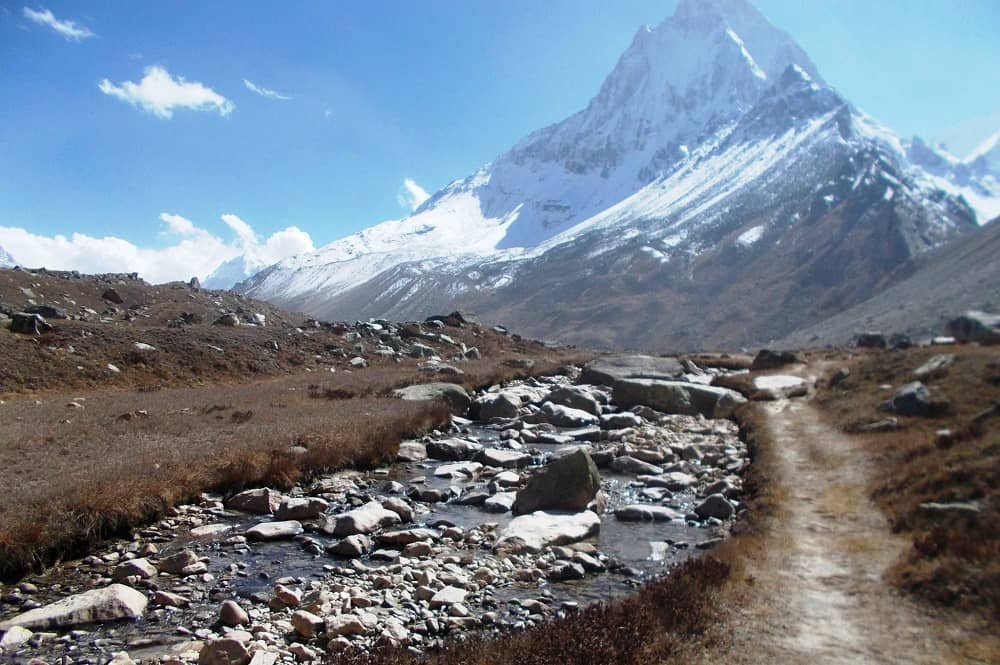
Tapovan is an extension beyond Gomukh, not a stop in the six-day itinerary described above.
Plan Responsibly
Permits, Fitness and High-Altitude Safety
The Gomukh route lies within the Gangotri National Park area. Access is controlled and the rules can change, so confirm the latest requirements before travel.
Park Permits
Obtain the required Gangotri National Park/Gomukh permits and carry identification and permit copies. Confirm current application procedure, daily visitor limits, fees and entry timings with the official authorities before departure.
Fitness and Pace
Prepare for consecutive walking days on uneven, rocky trails at high altitude. Regular walking, stair climbing and hill training can help, but no training plan removes the risk of altitude illness.
Altitude Awareness
Headache, nausea, dizziness, unusual fatigue or breathlessness can signal altitude illness. Tell your guide immediately; do not ascend with symptoms. Severe symptoms require urgent descent and medical help.
Weather and Trail
Mountain weather changes quickly. Rain, snow, rockfall, landslides or trail damage may delay or stop the trek. Follow local instructions and accept itinerary changes made for safety.
Leave No Trace
Carry all wrappers and waste back out, avoid single-use plastic where possible, stay on the permitted route and do not disturb wildlife, vegetation or religious sites.
Guides and Accommodation
Confirm your guide, overnight arrangements, meals and emergency plan before departure. Facilities at higher elevations are basic; do not rely on mobile coverage, ATMs or regular shops on the trail.
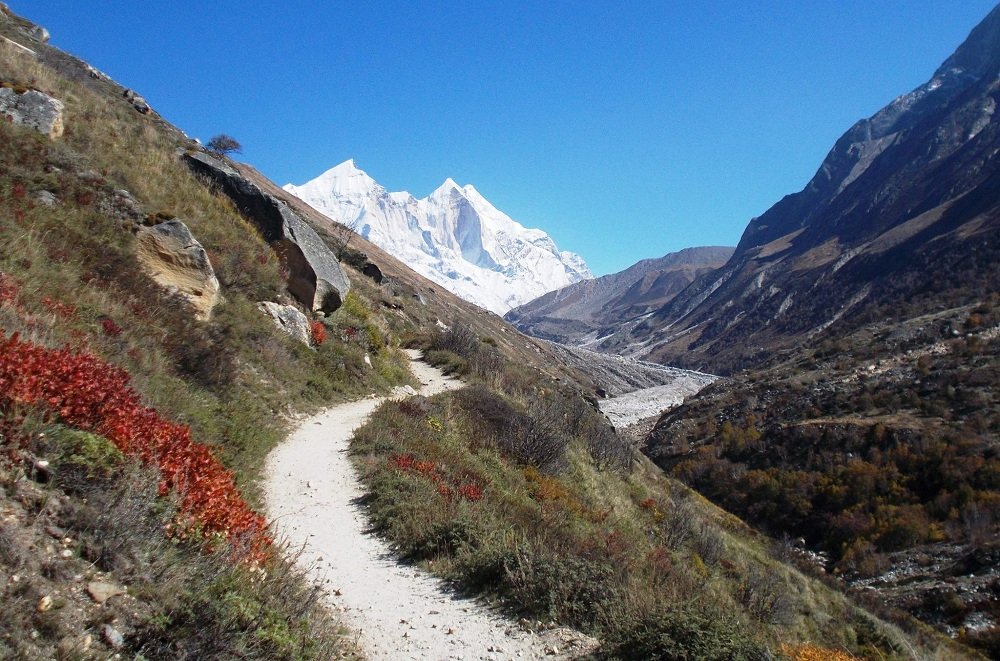
Pack for cold mornings, wind and sudden changes in mountain weather.
When to Go
Best Time for the Gomukh Trek
The trek is generally planned during the permitted trekking season, often in late spring and early autumn, but exact dates depend on snow, weather, park regulations and official access decisions. The monsoon period can bring heavy rain, landslides and unstable trails; late-season cold and snowfall can also affect access.
Do not choose dates from a generic calendar alone. Before confirming a 2026 or 2027 departure, verify that the route is open, permits are being issued, accommodation is operating and local authorities allow entry. Keep a buffer day if your onward travel is fixed.
What to pack
- Broken-in trekking boots with good grip and warm trekking socks.
- Layered thermal clothing, fleece or insulated jacket, waterproof outer layer, gloves and warm hat.
- Sun protection, sunglasses, personal medicines and a compact first-aid kit.
- Reusable water bottles, snacks, headlamp, power bank and a waterproof bag for documents.
- Identification, permit confirmation and emergency contact details.
Tour Planning Details
What to Confirm Before Booking
Because accommodation and park access are seasonal, the final inclusions should be written into your booking confirmation.
| Item | Planning notes |
|---|---|
| Transport | Private road transport between Rishikesh, Harsil, Gangotri and Uttarkashi, as specified in the final quote. |
| Guide | Confirm the trekking guide’s role, experience, language and coverage for all trekking days. |
| Accommodation | Harsil, Bhojwasa, Gangotri and Uttarkashi stays depend on the confirmed itinerary and availability. High-altitude facilities may be basic. |
| Meals | Confirm which breakfasts, lunches, dinners, packed lunches and trail snacks are included. |
| Permits and fees | Confirm park permits, entry fees and any required registrations in writing. Do not assume these are included unless listed. |
| Not included unless agreed | Personal gear, personal expenses, travel insurance, emergency evacuation, extra nights, porter support and costs arising from delays or route changes. |
This table is a booking checklist, not a claim that every item is included in the tour price. Ask for a written inclusions and exclusions list before paying.
Frequently Asked Questions
Gomukh Gangotri Trek FAQs
Clear answers to common questions about the Gomukh trek from Rishikesh and the Tapovan extension.
1. How many days are needed for the Gomukh trek from Rishikesh?
This itinerary uses six days and five nights for the road journey, trekking to Gomukh and returning to Rishikesh. The schedule is ambitious because Day 2 combines the drive to Gangotri with the trek to Bhojwasa. It should be reviewed against current permits, daylight, fitness and accommodation arrangements before booking.
2. How far is Gomukh from Gangotri?
Gomukh is roughly 17 kilometres from Gangotri by the trekking route, depending on the route measurement and permitted trail conditions. The usual route passes through Chirbasa and Bhojwasa. Confirm the current route with local authorities and your guide.
3. Is the Gomukh Gangotri Trek difficult?
It is a strenuous high-altitude trek because of the distance, elevation, rocky trail and limited facilities. It is not suitable to treat as a casual walk. Travellers should prepare physically and discuss medical or fitness concerns with a qualified healthcare professional before travel.
4. Is a permit required for Gomukh?
Yes. Access through Gangotri National Park is regulated. Check the latest official permit process, fees, entry limits and required documents before travelling, as rules can change.
5. Does this six-day itinerary include Tapovan?
No. This itinerary reaches Gomukh and returns to Bhojwasa. The Gomukh Tapovan Trek continues beyond Gomukh and requires additional planning, suitable guide support, specific permit approval, more time and appropriate camping and safety arrangements.
6. Can beginners do the Gomukh trek?
Beginners without experience at altitude should be cautious. A person may be generally fit yet still struggle with altitude, long trekking days or rough terrain. Consider a shorter trek first and discuss your experience honestly with the operator.
7. Is mobile network available on the trail?
Coverage can be unreliable or unavailable along parts of the route. Do not depend on mobile service for navigation or emergencies. Travel with a guide and agree on an emergency plan before leaving Gangotri.
8. Can the itinerary change?
Yes. Weather, landslides, permit restrictions, trail damage, accommodation availability and altitude symptoms can affect the schedule. Safety and official instructions take priority over the planned itinerary.
Plan with Local Support
Ready to Discuss Your Gomukh Gangotri Trek?
Share your preferred dates, group size, trekking experience and whether you want Gomukh only or the longer Gomukh Tapovan Trek. We can help you review the route, transport, accommodation, guide support and permit requirements before confirming arrangements.