
Discover Triyuginarayan Temple Trijuginarayan Uttarakhand, 2025
India has different temples of Lord Shiva, and each temple has its own beliefs. In this article, we are talking about an ancient temple dedicated to Lord Vishnu, located in Rudraprayag district of Uttarakhand. This temple is surrounded by beautiful mountains.
Located in the Triyuginarayan village of Uttarakhand, this temple has a very special significance. Triyuginarayan is made up of three words: Tri, Yugi, and Narayan. Here, Tri means three, Yugi represents the era (Yuga), and Narayan is another name for Lord Vishnu.
The temple is also known as the Akhand Dhuni Temple. Learn about the stories related to this temple:
-
Marriage of Bholenath: It is believed that the marriage of Lord Shiva with Devi Parvati, the daughter of Himavat, took place at this place. It is said that Lord Vishnu was the witness of this marriage.
-
There is also a fire pit (Agnikund) here, in which a divine flame burns. It is said that this flame has been burning since the time of the marriage of Mahadev and Mata Parvati.
Triyuginarayan Temple Trijuginarayan Uttarakhand for Wedding!
It is believed that during the Satya Yuga, Goddess, in her child form (Bal Kanya), set out on a pilgrimage along the banks of the Ganga, passing through Haridwar, Kankhal, and further, enhancing the flow of the Ganga.
Seeing the child form of the Goddess, a demon began chasing her. To escape from this demon, the Goddess chose the holy and sacred place in Ajitpur village, where the various streams of the Ganga converge.
At this sacred Ganga bank, Maa Balakumari Ganga disappeared. The demon, unable to see the child form of the Goddess, failed in his attempt. Thereafter, the Goddess manifested herself at this holy bank in Ajitpur village in the form of Maa Balakumari Devi.
Location of the Temple
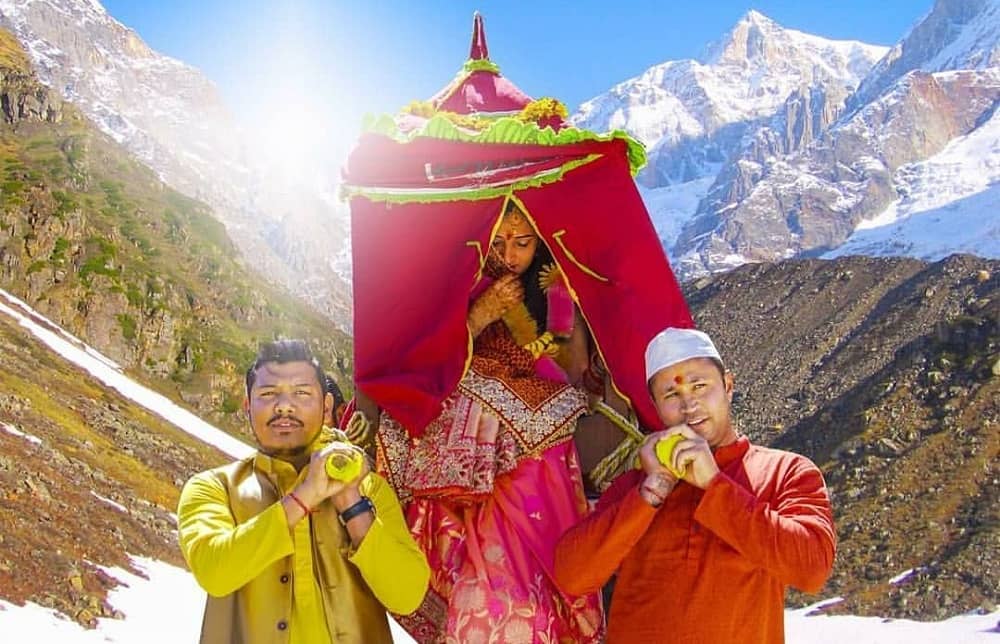
Triyuginarayan village in Uttarakhand is situated at an altitude of approximately 1,980 meters and is about 5 kilometers from Sonprayag, at the confluence of the Mandakini and Songanga rivers.
Priest of the Marriage – Brahma
According to Hindu mythology, it is said that the marriage of Shiva and Parvati took place in front of Lord Vishnu at this temple. It is believed that Lord Vishnu arranged all the rituals and ceremonies for the wedding, and the priest of the marriage was Lord Brahma. Here, you can see the Brahma Shila, which is said to be the spot where the couple took the seven vows (saat phere).
Water Originating from Lord Vishnu’s Navel
Near the temple, there are three sacred tanks (kunds): Rudra Kund, Vishnu Kund, and Brahma Kund. The water here flows from the Saraswati Kund. It is believed that this water originates from the navel of Lord Vishnu.
The Magical Triyuginarayan Village
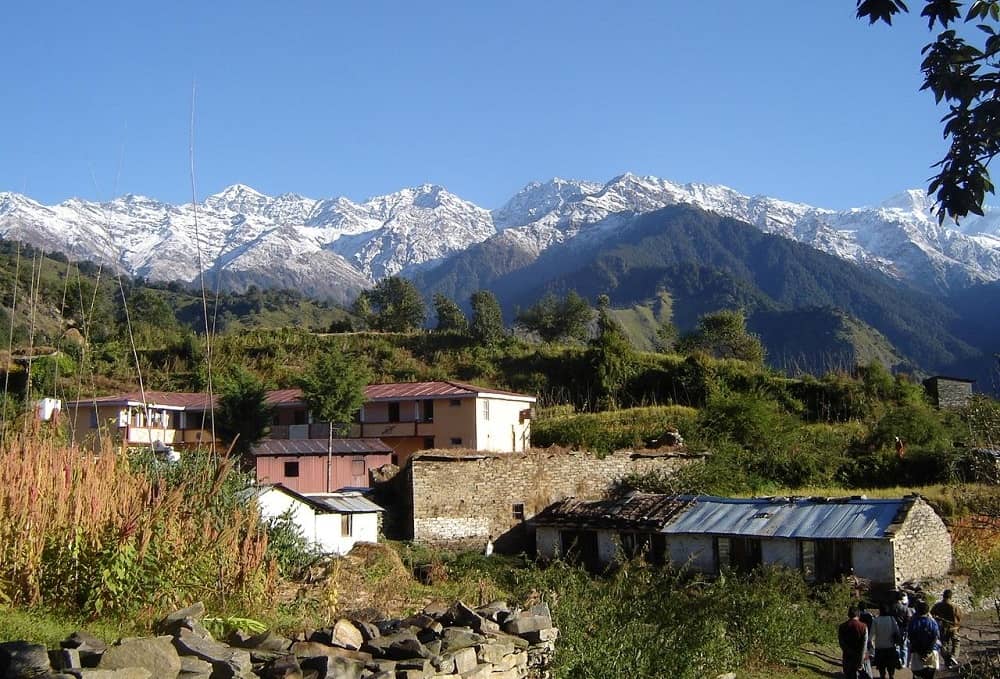
The Triyuginarayan Temple is in a little village called Triyuginarayan. It is very special because this is where Lord Shiva married Goddess Parvati a long, long time ago. Parvati was the daughter of the Himalayas and did lots of hard prayers at Gauri Kund (just 5 kilometers away!) to win Shiva’s heart.
The temple was made to honor Lord Vishnu, who helped arrange the wedding and acted as Parvati’s brother. Lord Brahma, the creator god, was the priest for the wedding. A big stone called Brahma Shila marks the exact place where the wedding happened.
There is an eternal holy fire burning in front of the temple. People add wood to it as a prayer, and they take the ashes home as blessings for a happy married life. Close to the temple are four special ponds—Rudra Kund, Vishnu Kund, Brahma Kund, and Saraswati Kund. Their waters are believed to be holy and can even cure people!
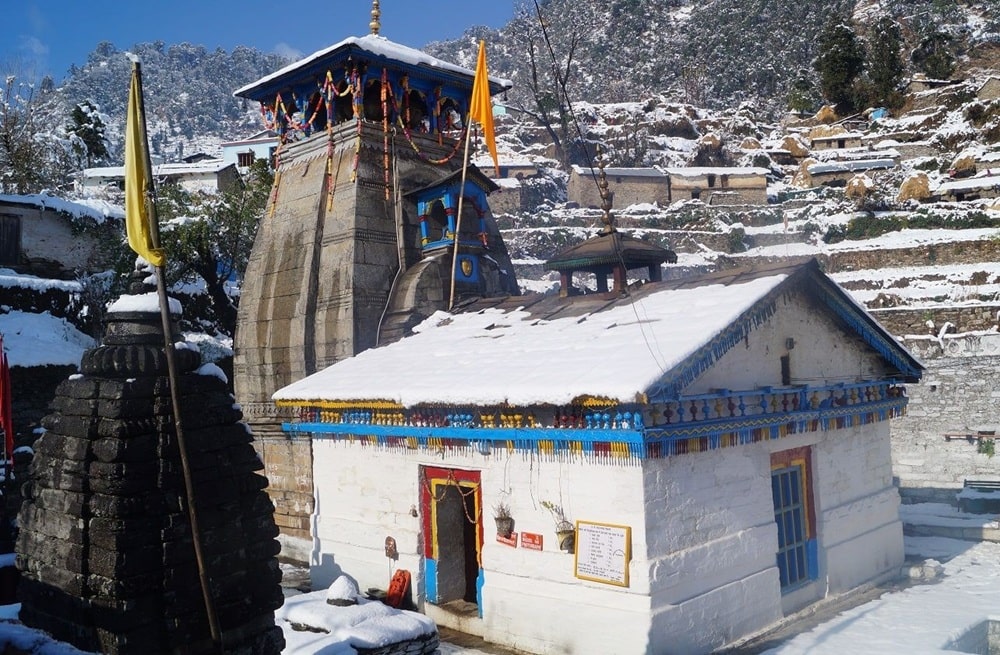
The temple is 6500 feet high, surrounded by tall mountains and snow in the winter. Pilgrims also visit the Gauri Kund Temple nearby or trek to the famous Kedarnath Temple. The architecture of Triyuginarayan Temple is similar to Kedarnath, and inside, there’s a silver statue of Lord Vishnu, along with Goddess Lakshmi and Goddess Saraswati.
How to Reach
To visit, you can trek from Sonprayag, which is 12 kilometers away. The path goes through pretty forests and hills. The nearest airport is in Dehradun, while Rishikesh is the closest railway station. Some people even take long treks from Mussoorie, which is super exciting and full of adventure!
This place is a must-visit for those who love stories, nature, and devotion. It’s like stepping into a fairytale of gods and goddesses!
Jagannath Temple to Visit on Wedding Anniversary
Jagannath Temple, Puri
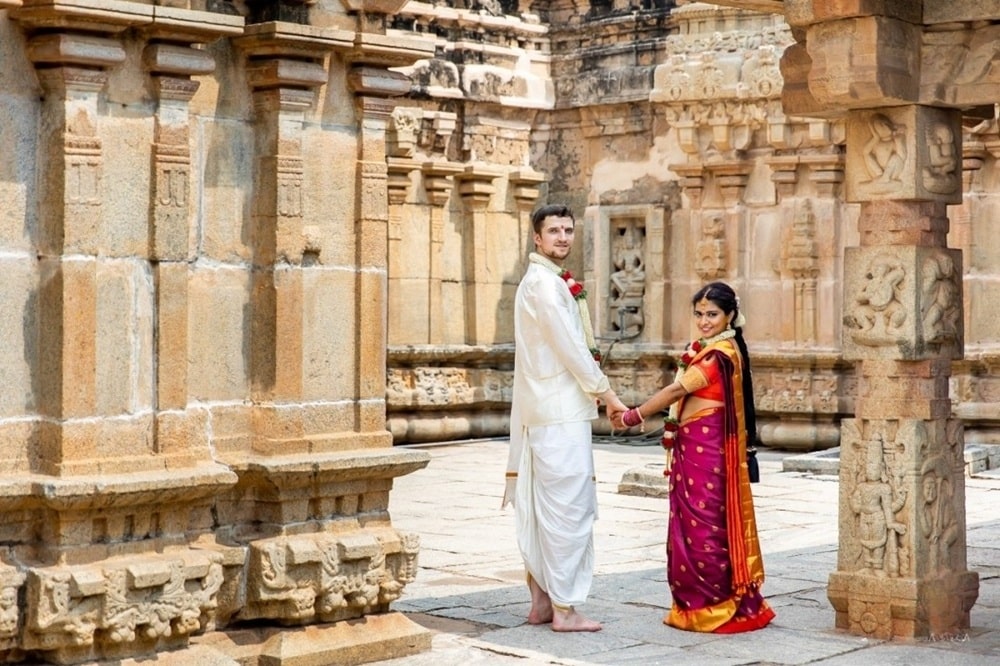
The Jagannath Temple in Puri, Odisha, is a very special place for couples. Dedicated to Lord Jagannath, it is believed to strengthen the bond between partners and help them resolve conflicts.
Marriage is considered a holy and sacred ritual, and many people visit this temple to seek blessings for their union. Couples can even finalize their marriage date at the Mahesh Jagannath Temple, making their journey together truly blessed and spiritual.
Daily Rituals at the Jagannath Temple, Puri
The Jagannath Temple in Puri is known for its unique worship practices that treat Lord Jagannath and his siblings, Balabhadra and Subhadra, as beloved family members. The rituals have remained largely unchanged since the temple’s inception.
Morning Rituals
- Wake-Up Ceremony: The deities are awakened to the sound of music and arati.
- Morning Care: Their nightclothes are changed, and they have their teeth brushed. They are then bathed and dressed for the morning darshan.
Meals and Offerings
- Early Breakfast (Gopal Ballabh): A light meal of fruits, curd, and green coconut.
- Second Breakfast (Raj Bhoga): Served at 10 AM, followed by betel nut to aid digestion.
- Lunch (Madhyana Dhupa): An elaborate meal at 1 PM, which in 1910 included 435 dishes!
Afternoon Siesta
After their mid-day meal, the deities are allowed to rest. Cots are brought into the sanctum sanctorum, and the gods enjoy a peaceful nap.
Evening Rituals
- Awakening Ceremony: By 6 PM, the deities are woken for an evening snack (Sandhya Dhupa) and darshan.
- Chandanalagi: They are adorned with cooling sandalwood paste and prepared for the evening festivities.
Late Night Rituals
- Dinner (Badasinghar Bhoga): A late meal is served at 10:30 PM.
- Bedtime Ceremony: The cots are replaced with comfortable couches. A sevak recites the Gita Govinda by Jayadeva, accompanied by a veena, to lull the deities to sleep.
The Lord of the Universe and his siblings slumber in bliss until the next morning, when the cycle of love and devotion begins anew.
A Ritual of Devotion
This routine reflects the intimacy and care with which the deities are worshipped, emphasizing their role not just as divine beings but as cherished family members within the temple.
Significance
The Jagannath Temple is not just a place of worship but a symbol of devotion, resilience, and cultural heritage. It continues to inspire millions of devotees with its rich history and spiritual sanctity.
The Magnificent Jagannath Temple, Puri
The Jagannath Temple in Puri, Odisha, is one of India’s most revered Vaishnava temples. It is an ancient place of worship, still active today. The main shrine was built in the 10th century by Anantavarman Chodaganga of the Chodaganga dynasty. The deities, however, are believed to be much older, linked to King Indrayumna, a mythical ruler from the Satya Yuga and a relative of Lord Ram.
Historical Highlights
- In 1174 AD, King Anang Bhim Deo ascended the throne of Orissa. During a religious crisis, after slaying a Brahmin, he devoted himself to temple construction to atone for his sins.
- He added ancillary shrines and walls to the Jagannath Temple. This enormous project took 14 years and cost 1.5 million measures of gold.
- The Chattisanijoga, an organized order of temple servitors, was established to manage the temple’s activities.
The Crisis of 1568
In 1568, after the Nawab of Bengal, Sultan Suleiman Karani, defeated the Gajapati ruler Mukunda Deva, his general Kalapahad attacked the temple.
- The deities were secretly moved near Chilika Lake to protect them.
- Unfortunately, Kalapahad found and burned the sacred idols. A devotee retrieved the Brahma (soul) of the deities from the ashes and preserved it inside a mridanga (drum).
- This marked a period of mourning for the temple, and the famous Mahaprasad (offering of 56 dishes) was not served until the deities were reinstated.
Triyuginarayan Temple Trijuginarayan Uttarakhand Triyuginarayan Temple Trijuginarayan Uttarakhand Triyuginarayan Temple Trijuginarayan Uttarakhand Triyuginarayan Temple Trijuginarayan Uttarakhand Triyuginarayan Temple Trijuginarayan Uttarakhand Triyuginarayan Temple Trijuginarayan Uttarakhand Triyuginarayan Temple Trijuginarayan Uttarakhand Triyuginarayan Temple Trijuginarayan Uttarakhand Triyuginarayan Temple Trijuginarayan Uttarakhand Triyuginarayan Temple Trijuginarayan Uttarakhand Triyuginarayan Temple Trijuginarayan Uttarakhand Triyuginarayan Temple Trijuginarayan Uttarakhand Triyuginarayan Temple Trijuginarayan Uttarakhand