
Jesus Cave Rishikesh: Meet the Legend of Jesus’ Lost Years (18)
Jesus Cave Rishikesh is one of the most mysterious and spiritually charged places near the holy town of Rishikesh. Hidden quietly on the banks of the sacred River Ganga, this lesser-known cave attracts seekers, meditators, and curious travelers who wish to explore the legend of Jesus’ Lost Years in India.
Located within the serene surroundings of Vashistha Guha Ashram, the cave offers a rare combination of history, spirituality, nature, and mysticism—making it a must-visit destination for spiritual travelers exploring Uttarakhand.
Where Is Jesus Cave Rishikesh Located?
Jesus Cave Rishikesh is situated inside the premises of Vashistha Guha Ashram, around 23–25 km from Rishikesh, near Tapovan, on the Badrinath Highway (NH-58) toward Devprayag.
-
Distance from Rishikesh: Approx. 23 km
-
Route: Rishikesh – Devprayag – Badrinath Highway
-
Nearest area: Tapovan
-
Landmark: Vashistha Cave Ashram
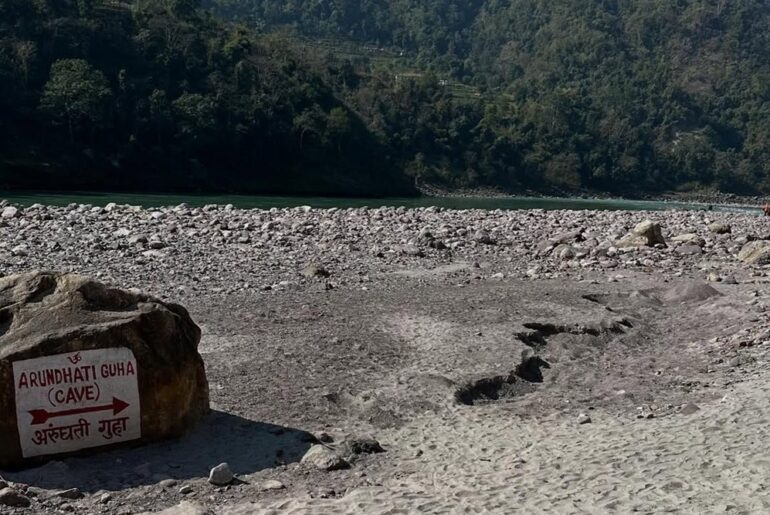
From the ashram complex, a five-minute downhill walk leads to a beautiful white sandy river beach along the Ganga. Just above this beach, carved into the mountainside and facing the river, lies the Jesus Cave, quietly overlooking the flowing Ganga and lush green Himalayan cliffs.

Why Is It Called Jesus Cave?
The name Jesus Cave Rishikesh comes from an ancient spiritual tradition that believes Jesus Christ lived in India during his “Lost Years”—the undocumented period between his youth and public life.
The cave is also known as:
-
Arundhati Guha
-
Arundhati Cave
-
Jesus Cave Rishikesh
The belief gained prominence in the early 20th century when Swami Rama Tirtha and Swami Papa Ramdas, at different times and without prior knowledge of each other’s experiences, both reported visions of Jesus walking through this cave.
This coincidence deeply strengthened the mystical reputation of the cave.
Spiritual Significance of Jesus Cave Rishikesh
Perched on a steep cliff overlooking the Ganga, Jesus Cave Rishikesh offers a powerful atmosphere for meditation, silence, and contemplation. The sound of the flowing river, combined with panoramic views of forested Himalayan slopes, creates a natural sanctuary for spiritual practice.
Key highlights:
-
Profound silence and isolation
-
Strong meditative energy
-
Direct view of River Ganga
-
Ideal for spiritual retreats and seekers
The cave holds both historical mysticism and spiritual depth, making it especially appealing to travelers interested in yoga, meditation, and ancient spiritual traditions.
Suggested Read: Best Ashram to stay in Rishikesh for Yoga and Meditation
Swami Purushottamananda and Jesus Cave
One of the most important figures associated with Jesus Cave Rishikesh is Swami Purushottamananda, a wandering Hindu monk from South India.
Who Was Swami Purushottamananda?
-
Born as an engineer by education
-
Renounced material life to take Sannyasa
-
Disciple of Swami Brahmananda Saraswathi
-
Lived in the cave from 1928 until 13 February 1961
After retiring from the Ramakrishna Mission Society in the early 1920s, he wandered through the Himalayan region along the Ganga and discovered Vashistha Guha in 1928.
At that time, the cave area was covered by tall Gullar trees, and Swami Purushottamananda chose to live and meditate there until his final breath. He attained Mahasamadhi on Maha Shivaratri night in 1961.
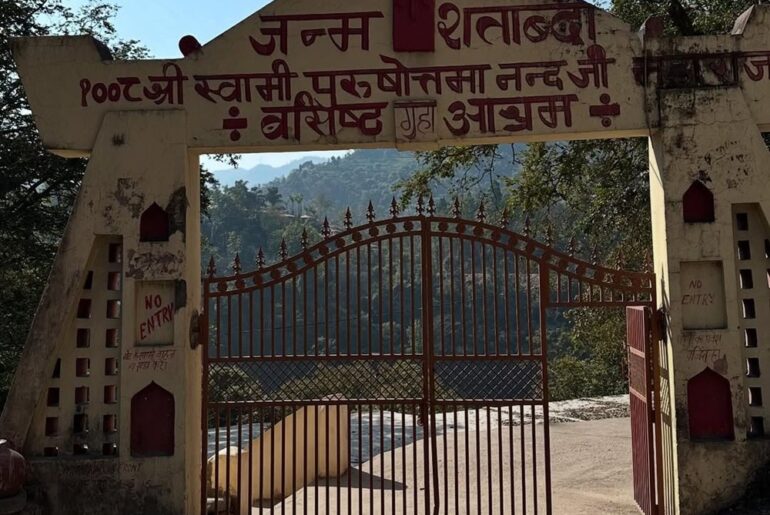
Vashistha Cave Rishikesh: The Sacred Ashram
Vashistha Cave Rishikesh is believed to be over 9,000 years old. According to Hindu tradition, Sage Vashistha, the guru of Lord Rama, lived and meditated here.
Important Facts About Vashistha Cave
-
Located on NH-58, Rishikesh–Badrinath route
-
Associated with Sage Vashistha
-
Maintained by Swami Purushottamananda (1928–1961)
-
Currently managed by Swami Chaitanyananda, his direct disciple
Inside the cave:
-
A natural Shiva Lingam
-
Space for 8 people to meditate
-
Oil lamps, flowers, and prayer offerings
-
A round stone slab where Swami Purushottamananda meditated
Local legends even tell stories of a lion crossing the Ganga each night to sit guard outside the cave while the saint meditated inside.
Vashistha Cave Rishikesh
Today the cave extends into the hillside about 20 feets, and then opens into a large enough space to seat and meditate about eight people. There is a round stone slab where Swami Purushottamananda used to meditate. The cave altar hosts a shiva lingam. A couple of oil lamps , water pot and flowers are for offering prayer.
Sri Satya Sai Baba made his visit to Cave for three consecutive days while visiting Swami Sivananda near Ram Jhula at Divine life society in Rishikesh 1959.
The Ganga here takes a wide curve near Ashram, So Ganga makes a wide beach space to sit and meditate that makes the scenery doubly attractive.
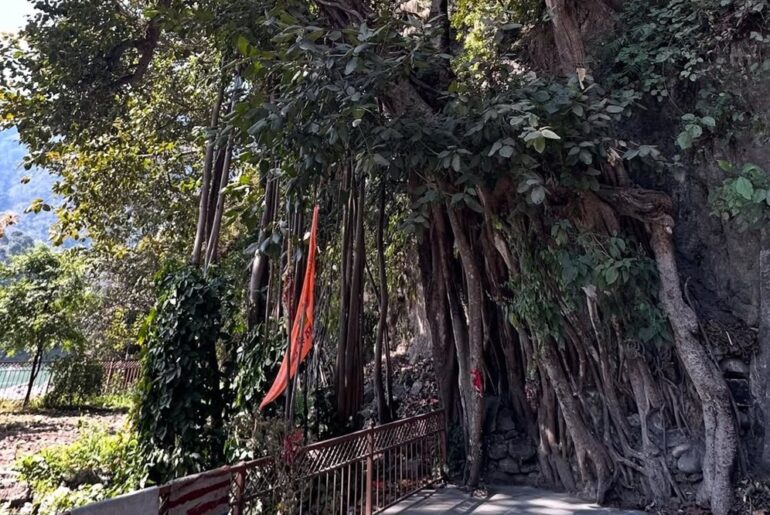
Jesus Cave Rishikesh ( Arundhati Cave )
Jesus Cave Rishikesh (Arundhati Cave) Explained
A short walk from Vashistha Cave leads to Arundhati Guha, popularly known today as Jesus Cave Rishikesh.
-
Positioned slightly above the riverbank
-
Faces a wide sandy and rocky stretch of the Ganga
-
Smaller and shallower than Vashistha Cave
-
Contains a small white Shiva Lingam at the back
The cave gained international recognition after Swami Papa Ramdas described his experience in the book “The Vision of God” (1934).
He wrote that on the night before he stayed in the cave, Jesus Christ appeared there, and from that moment onward, the cave came to be known as Jesus Cave Rishikesh.
Jesus’ Lost Years in India: The Belief
The idea that Jesus lived in India during his lost years is popular both in India and abroad. Several spiritual teachers believed Jesus traveled through India, Tibet, and the Himalayas, learning meditation and ancient wisdom.
For deeper historical and archaeological research, many seekers refer to the book:
“Jesus Lived in India: His Unknown Life Before and After the Crucifixion” – by Holger Kersten
The Arundhati Guha or Arundhati’s Cave is also known as the Jesus Cave (GPS 30.114032, 78.430851) since the 1930s, when Papa Ramdas detailed about this place in his book “ the Vision of God ” in 1934.
Papa Ramdas tells the story in his book that how Ram (God) allow him to find the Vashistha cave. You know that time there was no good road or any significant trails leading there and it was only fables that it even existed.
Suggested Read: The Best Stay, Om Homestay Tapovan in Rishikesh
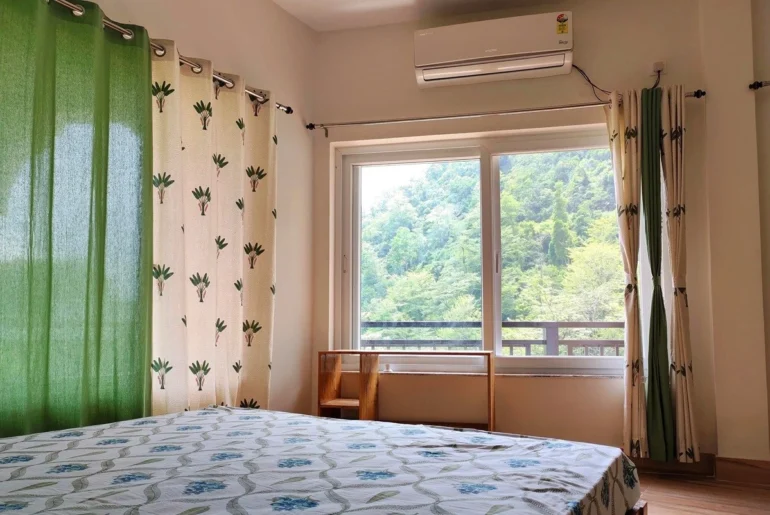
Why Visit Jesus Cave Rishikesh?
✔️ Spiritual silence
✔️ Powerful meditation energy
✔️ River Ganga views
✔️ Ancient legends and mysticism
✔️ Off-beat destination near Rishikesh
✔️ Ideal for conscious and slow travelers
Final Thoughts on Jesus Cave Rishikesh
Jesus Cave Rishikesh is not just a tourist spot—it is a living spiritual space where history, legend, faith, and nature come together. Whether you believe in the story of Jesus’ Lost Years or simply seek a quiet place for inner reflection, this hidden cave near Rishikesh offers a deeply transformative experience.
For travelers looking beyond crowded ghats and commercial yoga centers, Jesus Cave Rishikesh remains one of the most authentic, sacred, and soul-stirring places along the Ganga.
Cave Rishikesh Jesus Cave Rishikesh Jesus Cave Rishikesh Jesus Cave Rishikesh Jesus Cave Jesus Cave Rishikesh Jesus Cave Rishikesh Jesus Cave Rishikesh