
Discover the Haridwar History and Myths in Uttarakhand, India
Haridwar is a district in Uttarakhand, northern India, where the Ganges River emerges into the plains after traveling 250 km from its origin at the Gangotri Glacier. Known for its rich religious significance, Haridwar is an ancient and sacred city where people from across India and the world come to experience Hindu culture, rituals, and traditions up close. This holy city lies 30 km from Rishikesh, 90 km from Mussoorie, and 220 km from Delhi.
Why Visit Haridwar?
- Gateway to the Ganges: Haridwar is among the first points where the Ganges River flows into the plains, surrounded by lush green forests and scenic mountains, creating a tranquil atmosphere. The city’s ghats, especially in the evening, light up with hundreds of floating diyas (lamps) and marigold flowers as devotees perform rituals along the river.
- Spiritual Significance: Named from the Sanskrit words Hari (God) and Dwar (Door), Haridwar means “Gateway to God.” As a significant entry point for pilgrims heading to the Char Dham temples—Yamunotri, Gangotri, Kedarnath, and Badrinath—Haridwar is often considered a spiritual precursor to these revered shrines. For Shaivites, it is Har Dwar (Gateway to Lord Shiva), and for Vaishnavites, it is Hari Dwar (Gateway to Lord Vishnu).
Pilgrimage and Rituals:
-
- Har-ki-Pauri: The primary pilgrimage ghat, where the Ganges is believed to hold a footprint of Lord Vishnu at Brahmakund. It’s also one of the four locations where the Kumbh Mela is celebrated every 12 years and Ardh Kumbh every six years. A dip in these waters, especially during the Kumbh, is considered to cleanse sins.
- Temples and Shrines: Haridwar is dotted with temples, each with unique historical and mythological legacies, making it a spiritually immersive experience.
Cultural and Educational Hub:
-
- Ayurveda and Herbal Remedies: Haridwar is famous for Ayurvedic medicines and natural remedies, attracting health enthusiasts.
- Gurukula Tradition: Home to Gurukula Kangri Vishwavidyalaya (established in 1902), Haridwar continues India’s ancient tradition of Gurukula, where students learn in a unique environment combining Vedic and modern education.
Natural Attractions:
-
- Rajaji National Park: Located just 10 km from Haridwar, this park is ideal for nature and wildlife enthusiasts, offering opportunities for wildlife safaris and adventure.
- Subdivisions: Haridwar comprises areas like Mayapur, Ranipur, Jwalapur, Har-ki-Pauri, and Shivalik Nagar, each offering unique cultural and historical insights.
Haridwar’s Historical and Mythological Significance
Haridwar is celebrated as a point where Maa Ganga (Ganges) descended to Earth, sanctified by her divine journey from Lord Brahma’s kamandal, flowing past the feet of Lord Vishnu and through Lord Shiva’s locks. Known for purifying the negativities of the Earth, the Ganges is believed to offer spiritual redemption to those who take a dip here.
Haridwar, located in northern Uttarakhand, India, is one of Hinduism’s seven sacred cities and a major pilgrimage destination. Situated along the Ganges River, Haridwar marks the transition from the Indo-Gangetic Plain to the Himalayan foothills. The city has historically been known by various names, originally called Kapila after the sage who resided there. Its current name, “Door to Hari,” references Vishnu (Hari), one of Hinduism’s principal deities.
Haridwar, located in the Uttarakhand state of India, is one of the country’s holiest cities, where the revered River Ganges descends into the plains of northern India after its 250 km journey from its origin at Gaumukh (Gangotri Glacier). This city has been a pilgrimage hub for centuries, drawing devotees who come to take a holy dip in the Ganges, believed to purify one’s sins. With a spiritual ambiance, ancient temples, and historical significance, Haridwar embodies a quintessential Hindu pilgrimage experience, attracting visitors globally who seek to understand India’s spiritual heritage, vibrant Hindu rituals, and cultural traditions.
Geographic and Cultural Significance
Haridwar is approximately 30 km from Rishikesh, 90 km from Mussoorie, and 220 km from Delhi, making it a central destination in the pilgrimage routes of northern India. The surrounding lush forests and the pristine waters of the Ganges against a backdrop of the Shivalik range create a serene landscape.
One of the iconic sights in Haridwar is the evening aarti (prayer ceremony) at the ghats, where hundreds of diyas (lamps) and marigold flowers are floated along the river, illuminating the Ganges with a mystical glow. For nature and wildlife enthusiasts, the nearby Rajaji National Park offers an exciting adventure just 10 km from the city.
Mythological and Historical Roots
Haridwar holds deep mythological connections. Its name originates from the words “Hari” (God) and “Dwar” (gate), translating to the “Gateway to God.”
This city is seen as an entry point to the sacred Char Dham—Yamunotri, Gangotri, Kedarnath, and Badrinath—where Hindu devotees embark on pilgrimages to these revered temples in the Himalayas. Haridwar is considered a place blessed by the trinity of Hindu gods—Brahma, Vishnu, and Shiva—signifying its spiritual importance.
Historically, Haridwar has an extensive past dating back to 1700–1800 BCE, with archaeological evidence showing the existence of a terracotta culture.
During its long history, Haridwar saw rulers from the Maurya and Kushan empires and was even visited by the famed Chinese traveler Huan Tsang in 629 AD. It was a significant port during the British period, and structures like the Bhimgoda Dam, established in 1854, highlight its importance in British-India’s infrastructure.
Legends and Religious Practices
The city is tied to numerous legends, including King Bhagirath’s penance to bring the Ganges to earth to liberate the souls of his ancestors. It’s said that drops of Amrit (nectar of immortality) fell here during the mythical Samudra Manthan (churning of the ocean), making Haridwar one of the four Kumbh Mela locations.
Every 12 years, the Kumbh Mela and, every six years, the Ardh Kumbh attract millions of devotees seeking spiritual fulfillment. This city is also where Hindu priests have maintained ancient genealogy records, known as vahis, preserving the family histories of countless Hindu families.
Beyond Pilgrimage
Aside from its religious significance, Haridwar is a center of learning in Ayurveda and other traditional arts, with Gurukul Kangri Vishwavidyalay (established in 1902) as a notable institution teaching in the traditional Gurukul system. Haridwar’s vibrant marketplaces are famous for Ayurvedic medicines, herbal remedies, and cultural artifacts, making it a unique blend of spiritual and cultural richness.
Must-Visit Areas and Events
The city’s famous areas include Har Ki Pauri, where the Ganges is most accessible for pilgrims and the site of the iconic evening aarti. The city is also home to the sacred towns of Mayapur, Ranipur, and Devpura, each holding its distinct charm.
The ghats and the annual gatherings during the Kumbh and Ardh Kumbh Mela, where devotees gather in staggering numbers to take a dip in the Brahmakund at Har Ki Pauri, provide a mesmerizing spectacle of faith and devotion.
Haridwar is an enduring symbol of faith, embodying centuries of Hindu tradition, mythology, and spirituality. For those seeking solace, historical insight, or a spiritual experience, Haridwar continues to serve as a sacred gateway to the divine.
Key Pilgrimage Sites in Haridwar
- Har-ki-Pauri: The city’s main pilgrimage site, Har-ki-Pauri is a bathing ghat with steps leading down to the Ganges. Here, a stone bears what many believe to be Vishnu’s footprint, making it a powerful site for spiritual cleansing. Each April, pilgrims gather here to celebrate the beginning of the Hindu solar year, and every 12th year Haridwar hosts the Kumbh Mela, one of Hinduism’s largest religious gatherings.
- Daksha Mahadev Temple: Located in Kankhal, 3 km downstream, this temple is another sacred site dedicated to Lord Shiva and is visited by pilgrims year-round.
Additionally, Haridwar is close to Roorkee, home to the Indian Institute of Technology (IIT) Roorkee, Asia’s oldest civil engineering college.
Overview: Haridwar History
- Long ago, during the time of the Vedas, Haridwar was mentioned as Mayapuri and Gangadwara. In the epic Mahabharata, it’s called Kapilsthan, where the sage Kapil meditated.
Learning & Healing:
- Haridwar was a place of wisdom and healing. The great sage Vyasa composed the Mahabharata here, and the city was also known for Ayurvedic medicine, with the famous physician Charaka practicing his craft.
Suggested Read- Shaktipeeth in Haridwar: Temple Triangles in Uttarakhand
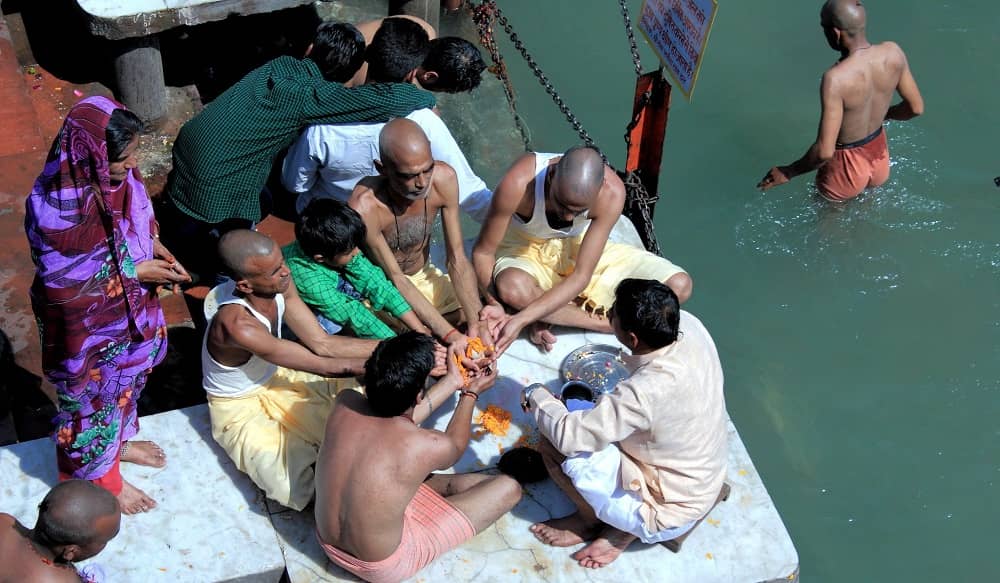
Pind Daan at Har-Ki-Pauri Ghat in Haridwar
Where and When:
- You can find Haridwar in Uttarakhand, nestled by the Ganges River at the foothills of the Shivalik range. The best time to visit is from September to April, with the ideal months being October to March.
Going to Kedarnath:
- If you’re planning to travel from Haridwar to Kedarnath, it’s about a 260 km journey by road. You’ll pass through places like Rishikesh and Rudraprayag before trekking 16 km to reach the sacred Kedarnath temple.
Tracing Haridwar History
- The Maurya Empire ruled from 322 BC to 185 BC.
- Huan Tsang, a traveler, mentioned Haridwar in 629 AD during King Harshvardhan’s time.
- Timur Lang, a Turkish king, came in 1399, leaving a mark.
- During the 16th century, the Mughals, including Akbar, recognized Haridwar’s significance.
About Haridwar: Haridwar is a special city in India where people go to visit temples and celebrate Hindu culture. It’s a holy town where the Ganges River flows into the plains after coming down from the Himalayan mountains. This city is famous for its temples, holy places, and festivals.
Size and Location: Haridwar covers an area of 12.3 square kilometers. It’s not far from other popular places like Delhi (230 km), Rishikesh (25 km), Mussoorie (110 km), and Dehradun (55 km). It sits at an altitude of 315 meters above sea level.
People and Language: According to the 2011 census, around 1,75,010 people live in Haridwar city, while the entire Haridwar district has a population of 18,90,422. The sex ratio is 880 females per 1000 males. Hindi, Garhwali, and English are the main languages spoken here.
Culture and Dress Code: Haridwar is a holy town where non-vegetarian food and alcohol are strictly not allowed. People are encouraged to wear cotton clothes in summer and warm clothes in winter. Wearing short clothes is discouraged because the town is considered very sacred.
How to Get Around in Haridwar: The best way to explore Haridwar is by auto-rickshaw, also called Vikrams or three-wheelers. They are affordable and can be shared with others.
Popular Temples in Haridwar:
- Har Ki Pauri – This is one of the most famous places in Haridwar. It is where the Ganga Aarti is held every evening. People gather here to watch and pray as priests chant prayers and offer flowers and lamps to the river.
- Mansa Devi Temple – It is on a hill and is dedicated to Goddess Mansa Devi. You can go up the hill on foot or by cable car.
- Chandi Devi Temple – Another important temple dedicated to Goddess Chandi Devi. It’s also located on a hilltop.
- Maya Devi Temple – This is one of the oldest temples in Haridwar and is dedicated to Goddess Maya.
- Daksha Mahadev Temple – This temple is dedicated to Lord Shiva and is located in Kankhal, a part of Haridwar.
Things to Do in Haridwar:
- Ganga Aarti: Every evening, hundreds of people gather to watch the Ganga Aarti at Har Ki Pauri. This ceremony is special because people light diyas (lamps) and chant prayers to the Ganges River.
- Yoga and Meditation: Haridwar has many ashrams (spiritual centers) where people can learn and practice yoga and meditation. These practices help with relaxation and peace of mind.
- Holy Dip in the Ganges: Many people take a bath in the Ganges River. According to Hindu beliefs, this holy dip cleanses them of sins.
- Ashram Visits: Haridwar has many ashrams where people can learn about Hindu teachings, culture, and meditation.
- Shopping: You can buy spiritual items like stones, rudraksh beads, and idols of gods and goddesses.
Fun Activities:
- Walking Tour: Explore Haridwar by walking to learn about its history, culture, and local life.
- Biking or Cycling: Haridwar’s beautiful surroundings make it a great place to go biking or cycling. You can see hills, the river, and even jungle areas nearby.
Rajaji National Park:
Close to Haridwar is the Rajaji National Park, famous for its wildlife and forests. You can visit the park gates at Motichur, Ranipur, or Chilla, which are only 9 km away from Haridwar.
Weather and Best Time to Visit: Haridwar can be visited all year round. The Ganges water is cold and clean, especially during the rainy season when fresh water flows from the mountains.
In a Nutshell:
Haridwar History has legends, spirituality, and history. It’s a place where myths and ages come together, forming a tapestry of culture and devotion. Whether you’re exploring temples, witnessing rituals, or feeling the Ganges’ waters, Haridwar offers a unique glimpse into India’s ancient roots.
Haridwar History Haridwar History Haridwar History Haridwar History Haridwar History Haridwar History Haridwar History Haridwar History Haridwar History Haridwar History Haridwar History Haridwar History Haridwar History Haridwar History Haridwar History Haridwar History Haridwar History Haridwar History Haridwar History