
The Lost City Mysteries of Gevad Valley in Almora ( Travel Guide )
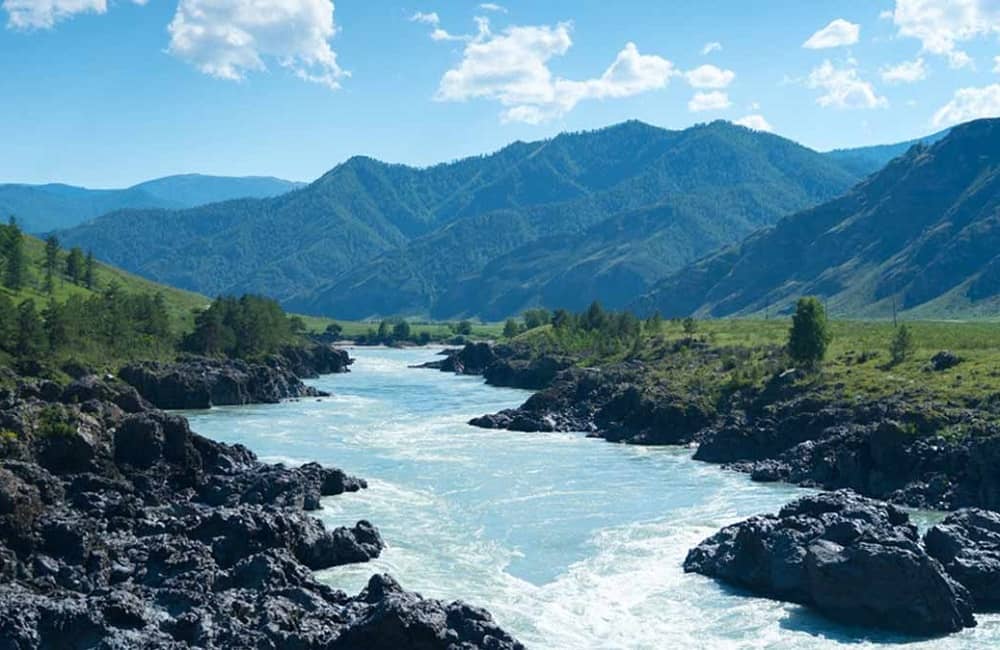
Hidden quietly along the banks of the Ramganga River, the Gevad Valley is emerging as one of Uttarakhand’s most intriguing archaeological frontiers. Tucked away in the Almora district, this unassuming valley may soon rewrite the early history of the Kumaon Himalayas.
According to experts, what appears today as peaceful farmland and forest could be the site of a lost ancient city, buried beneath layers of time.
The Archaeological Odyssey of Gevad Valley
The mystery of Gevad Valley gained momentum when the Archaeological Survey of India (ASI) began detailed surveys in the region. Stretching nearly 10 km of flat land along the Ramganga River, the valley stood out as a geographical anomaly in the otherwise rugged Himalayan terrain.
Archaeologists believe this flat expanse was ideal for early human settlement, trade, agriculture, and temple construction—strong indicators of urban life in ancient times.
ASI Survey Findings: Why Gevad Valley Matters
According to the Superintending Archaeologist, Dehradun Circle, ASI’s preliminary survey reports are “highly convincing”. These findings have encouraged plans for a more advanced archaeological survey and excavation, particularly around the Chaukhutia region.
Key reasons behind ASI’s interest:
-
Unusual concentration of 9th–10th century temples
-
Large, continuous flat land near a perennial river
-
Architectural remnants inconsistent with isolated village settlements
Together, these signs suggest a planned habitation, possibly an ancient town or city.
Katyuri Temples: Clues to a Forgotten Civilization
Scattered across Gevad Valley are numerous stone temples attributed to the Katyuri dynasty, who ruled Kumaon between the 7th and 11th centuries.
These temples were not built randomly.
Archaeologists point out:
-
Such dense temple clusters usually indicate large population centers
-
Temple construction often followed existing urban settlements
-
The valley’s scale suggests a civilization older than the Katyuri period
This strengthens the theory that the Katyuris may have revived or rebuilt over an even earlier city.
The Enigmatic Shivling Discovery
Adding another layer to the mystery is the discovery of a massive ancient Shivling in the Gevad Valley area.
🔱 Shivling Details:
-
Height: ~1.2 meters
-
Diameter: ~2 feet
-
Estimated Age: 9th century CE
-
Material & Style: Rare for the region
Archaeologists believe this Shivling belonged to one of the major Katyuri-era temples, indicating advanced religious architecture and significant spiritual importance of the site.
Such monumental Shivlings are rarely found outside major urban-religious centers.
Why Gevad Valley Could Be a “Lost City”
Based on ASI observations, Gevad Valley meets several criteria of an ancient city:
-
Proximity to a major river (Ramganga)
-
Flat terrain suitable for settlement
-
Dense religious architecture
-
Evidence of long-term habitation
-
Strategic location connecting interior Kumaon routes
If excavation confirms these theories, Gevad Valley could become one of the most important archaeological discoveries in Uttarakhand.
Spiritual, Historical & Cultural Significance
Gevad Valley uniquely blends:
-
Spiritual heritage (ancient Shiva temples)
-
Royal history (Katyuri rulers)
-
Urban archaeology (possible pre-Katyuri city)
-
Natural beauty (river valley landscapes)
This rare combination makes it a site of immense importance—not just for historians, but for cultural tourism and heritage conservation.
Conclusion: A Mystery on the Brink of Revelation
The Lost City of Gevad Valley stands at the threshold of rediscovery. As the Archaeological Survey of India prepares for deeper exploration, the valley waits patiently—guarding stories of forgotten kings, sacred rituals, and an ancient civilization buried beneath Himalayan soil.
For history lovers, spiritual seekers, and curious travelers, Gevad Valley in Almora is no longer just a scenic landscape—it is a living archaeological mystery, ready to reshape our understanding of Kumaon’s past.